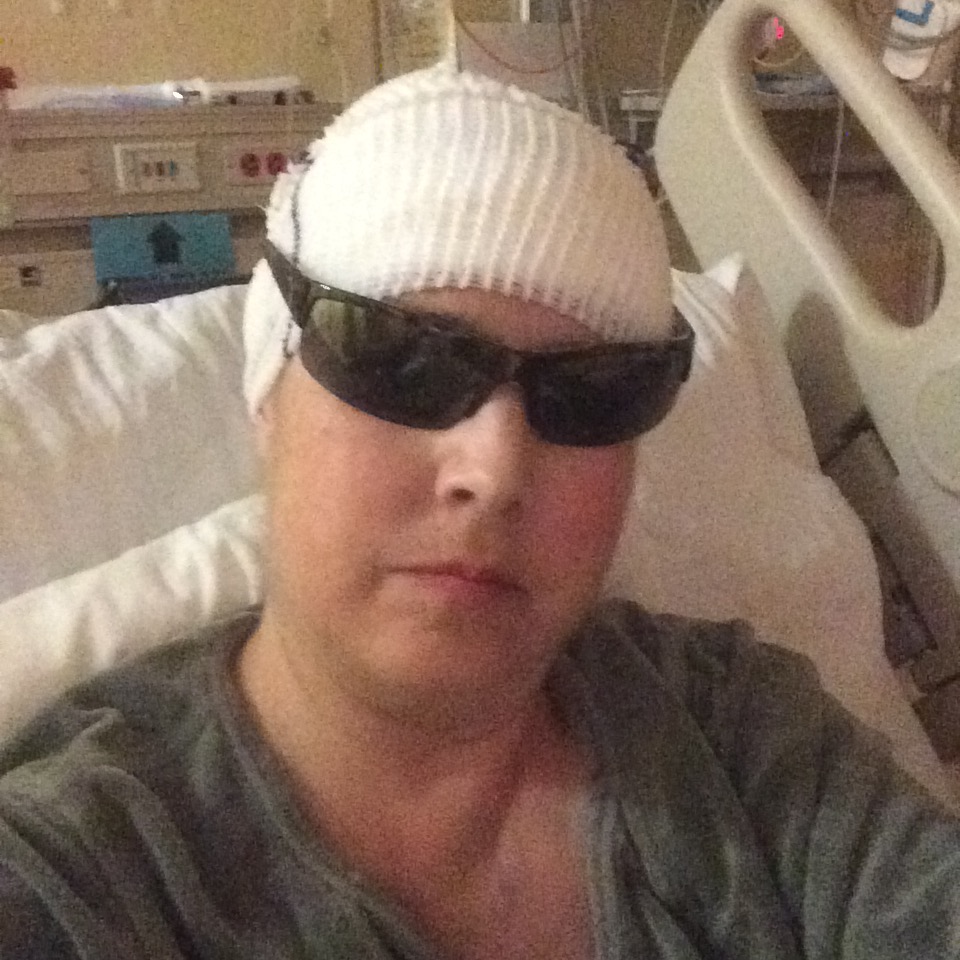
Sick

Ellen Time

by Spee

We’re living in what midwife Michelle calls “Ellen time,” floating through each day with each hour calling us to be fully present.  For the past ten days or so, Ellen has been speaking with more facility, had longer time periods of alertness, and been quite active physically, getting up many times a day and moving about from bed to couch to chair to bathroom.  While she’s more alert, she’s occasionally unclear and confused.  Eric, Kathryn, and others around Ellen are appreciating when she communicates a full idea and we often find humor in what she says, which is good for the soul.

Here’s one example:  For years, Ellen has been going to peer review each month in Saugerties, greatly enjoying these get-togethers where midwives share resources, discuss concerns, analyze complex cases, and otherwise support each other professionally.  At the September peer review gathering, the midwives celebrated Ellen, bringing stories and poems and Ellen’s favorite varieties of chocolates.  Then on Sunday, midwife Birdie came to see Ellen to share with her about that special gathering in her honor and to pass along some poems and cards.  As Birdie was getting started, Ellen commented, “Just tell me a little bit, because I don’t want to get too jealous.”

Here’s one that got a hearty laugh out of Eric:  Ellen said to him, “Would you please get me my … heavy … volunteers?”  “Oh,” says Eric picking up her sheepskin slippers, “Do you mean these?” (Yup.  How did he know that?!)

This one also brought laughter:  Jesse came home for a quick visit tonight and caught Eric in the midst of helping Ellen move from place to place.  “Spinning around, huh?” asked Jesse, and Ellen replied, “That’s what we do all day.”

It’s clearer that Ellen’s busy-ness is the terminal restlessness many people experience during this phase, and we’re feeling grateful that for Ellen, it’s not a frustrated or anxious state but a purposeful and peaceful state, with her going about her business.  Today nurse Elizabeth noted a couple of other “transition” symptoms like signs of decreasing blood circulation.  She asked Ellen if she has any anxiety about dying and Ellen responded that she does not, which was good to hear.

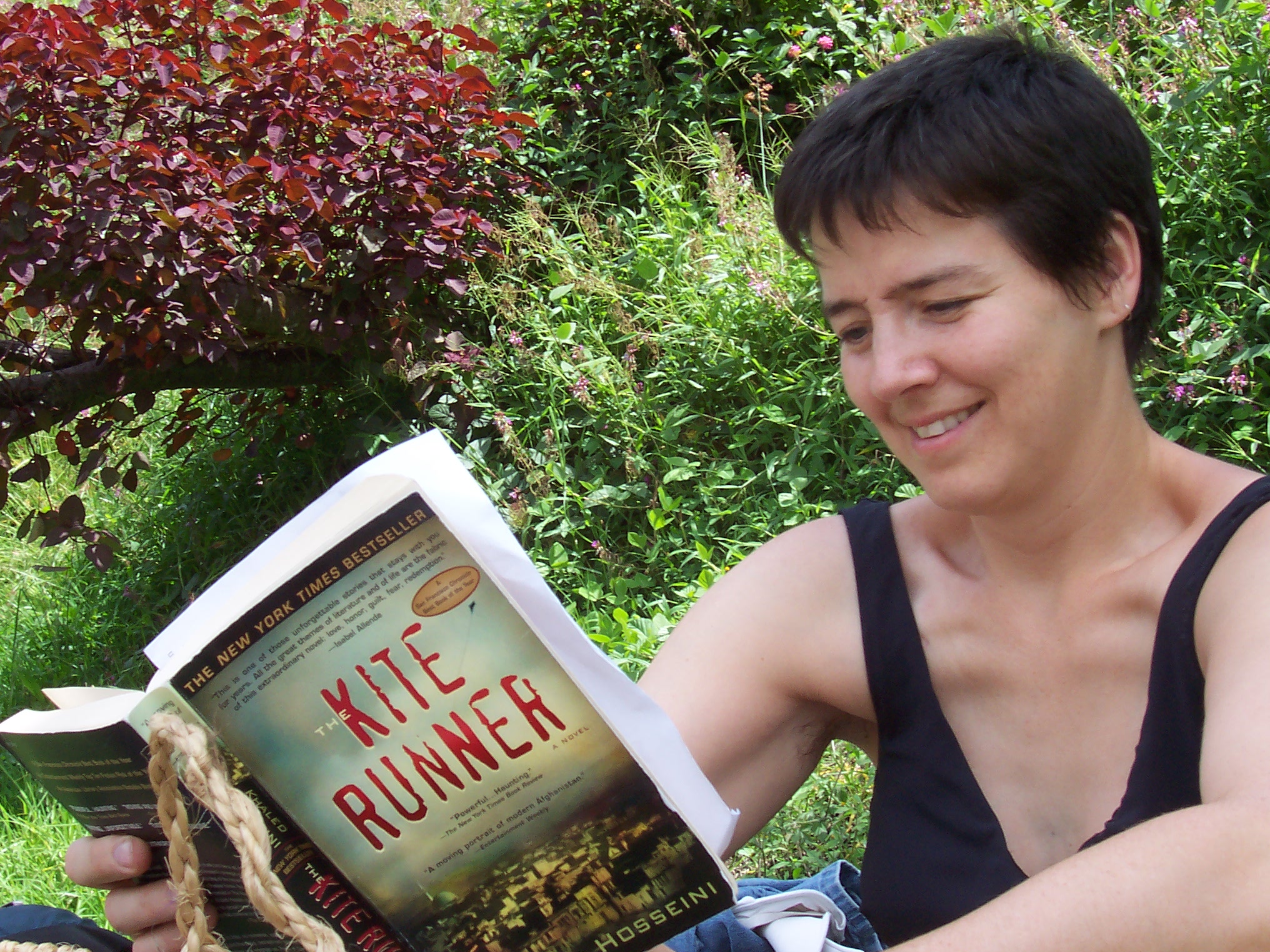
Ellen readingHere is one of my favorite photos of Ellen, taken one time when we were at the Cunuñacu hot springs in the valley below Quito, Ecuador.  Do you have a favorite photo of Ellen you’d be willing to share with the family?  If so, please send high-resolution versions by email (don’t worry about MB size) to Ellen’s sister Deb at debra@huntermorgan.com.  If you can provide the date, location, and names of others in the photos, that would be helpful.

Generosity in the Quiet

by Eric

This week continues the pattern of quiet.  Many hours of resting, drifting, eyes opening to acknowledge who’s sitting with her, sometimes a smile, and always response to what’s funny. And the big blessing, much less pain.  Some discomfort, but usually shifting and adjusting this or that makes things ok.

BEllenut the real story I want to share is generosity.  Earlier this week, Ellen acquiesced to being carried downstairs in the wheelchair and joined the crew for regular Tuesday family dinner.  Even though we toned down the usual rowdiness, it was clear that it was all a bit too much, and she didn’t even want anything to eat.  But she did it as a gift to us.  When we left the table, I asked if she would like to go out to the porch: nod.  After wheeling her out and sitting there in beautiful moonlight and breeze, just the two of us, just gorgeous, I realized that I hadn’t done something for her, by helping her out there, but rather that she knew I wanted that moment and was giving it to me as a gift, as she was ready to be back upstairs, tucked into bed.

As you know from earlier posts, Ellen has suffered some form of cerebral damage, either from the various therapies (radiation and chemo) or from a tumor (14 brain mets) that makes sentence production difficult.  The first half of a sentence usually gets out fine.  Examples are “can you get me…”  or “we need to…” or “remember that we should…” but the clincher, the thing that would tell us what she wants done, or how make things better, just doesn’t come, or comes out wrong.  At first, this was deeply, deeply frustrating, but this week I see a generosity settling in, toward those of us trying to help by guessing and getting it wrong (which doesn’t actually help because more words in the space just confuses things, so we’ve learned not to), but towards herself too.  Here’s a quintessential example from yesterday:

She said: “Can you please get me,” pause, “a white,” pause, “tripe?” And then, almost immediately, this beauty: “Boy, it would be funny if you really got me that!”  I never figured out what she wanted me to get her, and when I’ve asked her again if she’ll tell me, she gives me a sly grin and a head shake.  Hah!  More gifts.

Here’s a picture from the archives (2012) that reflects a bit of that humor and generosity.

Quiet Days

by Eric

Ellen is having quiet days generally.

One nice change we’ve seen since a week ago is Ellen being more active and alert and doing a bit (a bit) less sleeping and resting with eyes closed.  Perhaps this is because it’s now been a month since she’s had a chemo treatment.  She’s also doing a bit more talking but the sentences are rarely complete and the meaning not clear most of the time.  We’ve tried offering Ellen pen and paper to try writing to complete sentences but found she had the exact same difficulty as with speaking.  So instead we’re all getting better at asking yes/no questions when Ellen’s wanting something, e.g., “Is it something to eat or drink you want?  No.  Is it something like clothing or bed clothes?  No.  Is it something in the bathroom? Yes!”  All those years of 20 questions put to good use.  But its also clearly very frustrating for Ellen, so we try to keep the questions to a minimum.

Ellen needs someone close by at nearly all times, either in the room with her or maybe in Eric’s office next door.  When she makes a move to get up out of bed, it’s good for someone to spot her.  The last 4 or 5 times she’s been unable to get to her destination (unknown to us) and sinks down onto the floor, then manages slowly to get back in bed, asking for no help but usually accepting some eventually.  You won’t be surprised at the determination she’s showing.

Ellen continues eating and drinking in very small amounts.  This morning she enjoyed more bites than usual (4 instead of 1) of a melon from our own garden.  She’s chosen to take reduced amounts of her prescribed medications, maybe because of difficulty with getting them down and keeping them down.  When she doesn’t get the later meds, night-time sleep is interrupted, but usually she gets a long, good night’s sleep.

With hospice care came additional equipment and medications, mostly to have on hand for possible need later. Elizabeth, Ellen’s fabulous nurse, continues to come (as she has for months already under the palliative care program), but now is coming twice a week.  No home health aides are needed at this point, which I’m sure makes Ellen happy, as she much prefers care by her family and a few close friends, mostly midwives.

There’s a kind of peace and quiet that’s blessing this house in these days.  Lots of sitting and being.  Less doing and solving.

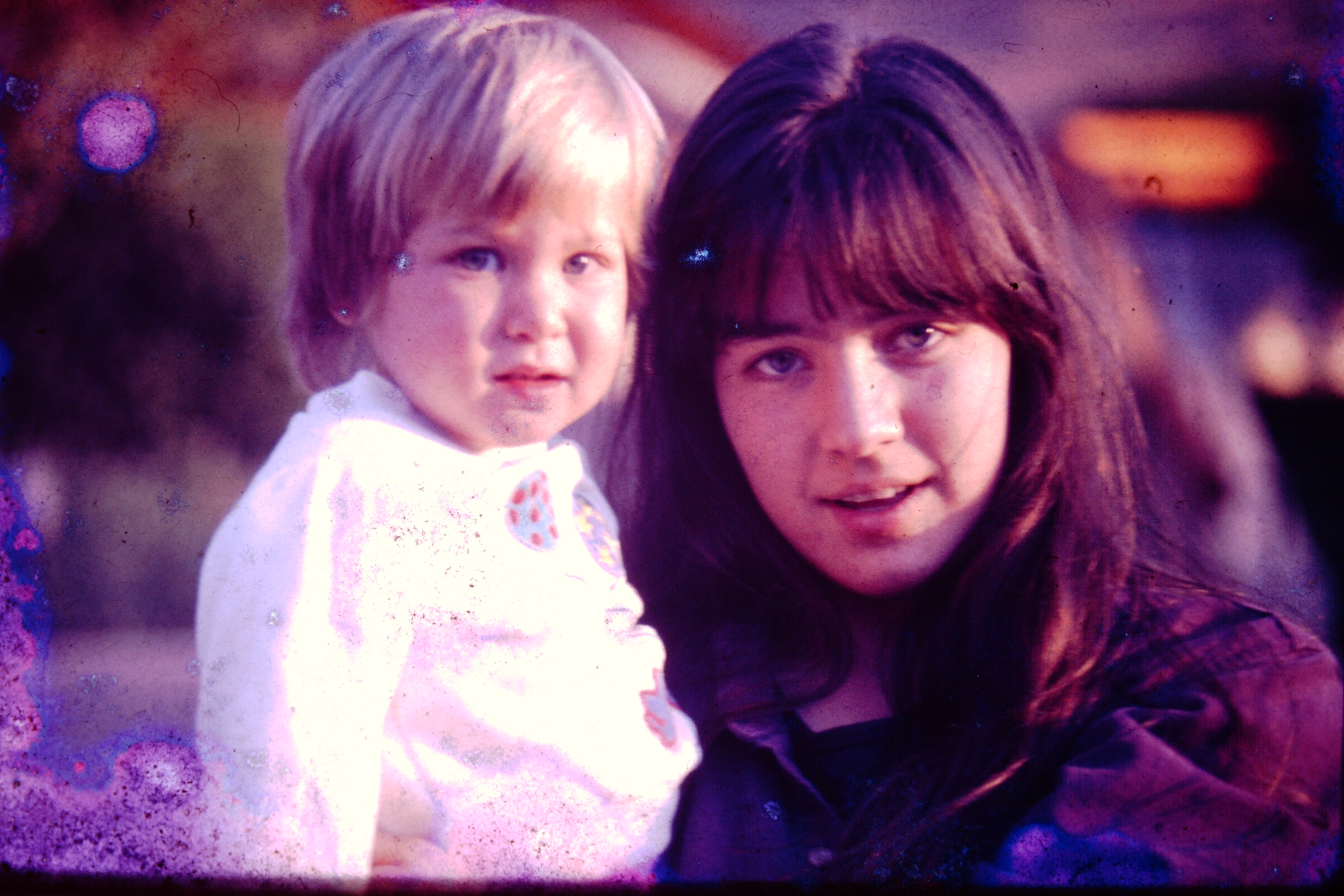
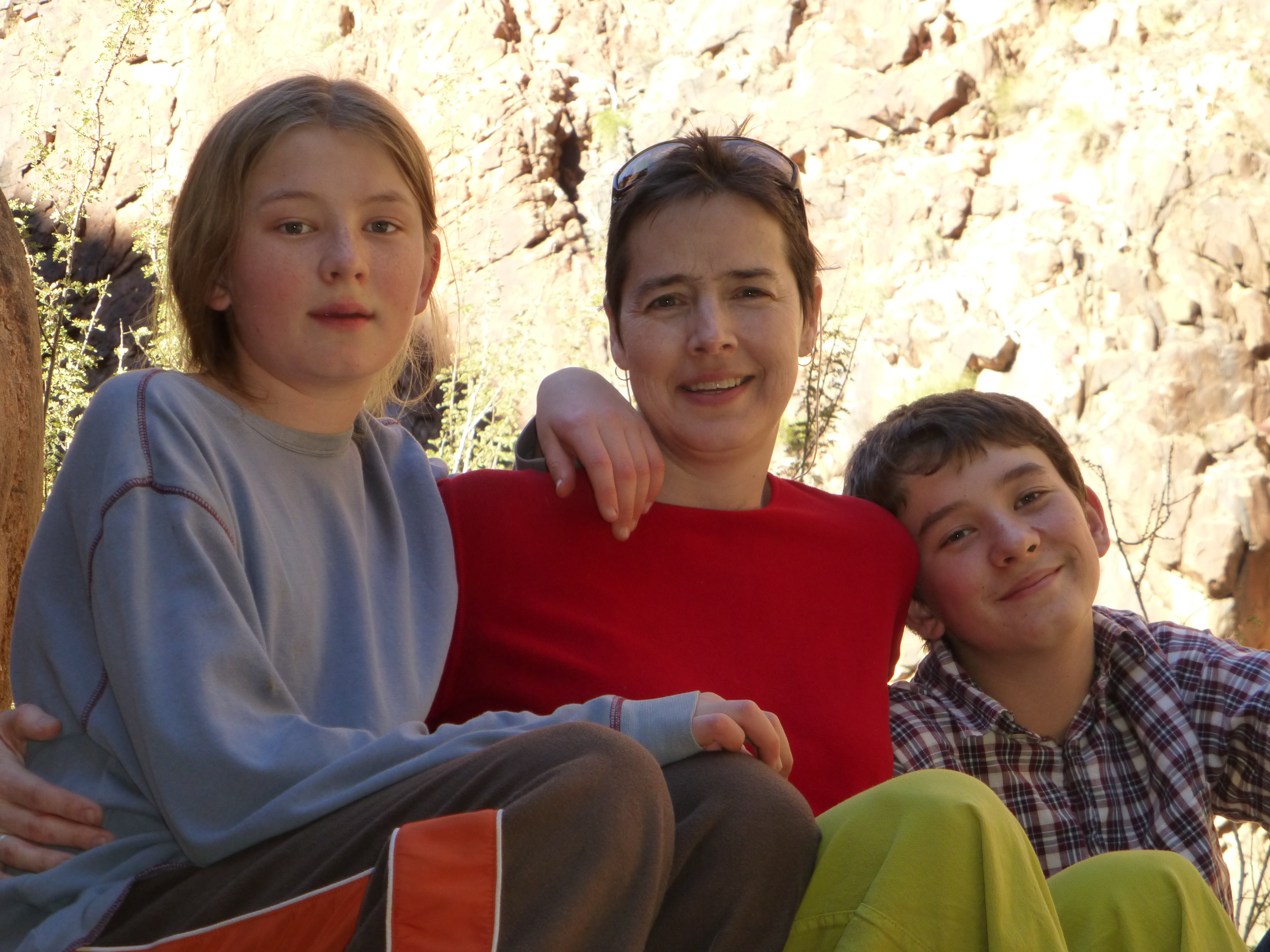
Here are some pictures of Ellen from years past, just for fun.

Ellen and Natalie many years ago... Niece Natalie with Ellen many years ago…

Jesse, Ellen and Will at the bottom of the grand canyon. Jesse, Ellen and Will at the bottom of the Grand Canyon (2014).

On a hike in Vermont On a hike in Vermont (2012)

Fifty Years Plus

by Eric

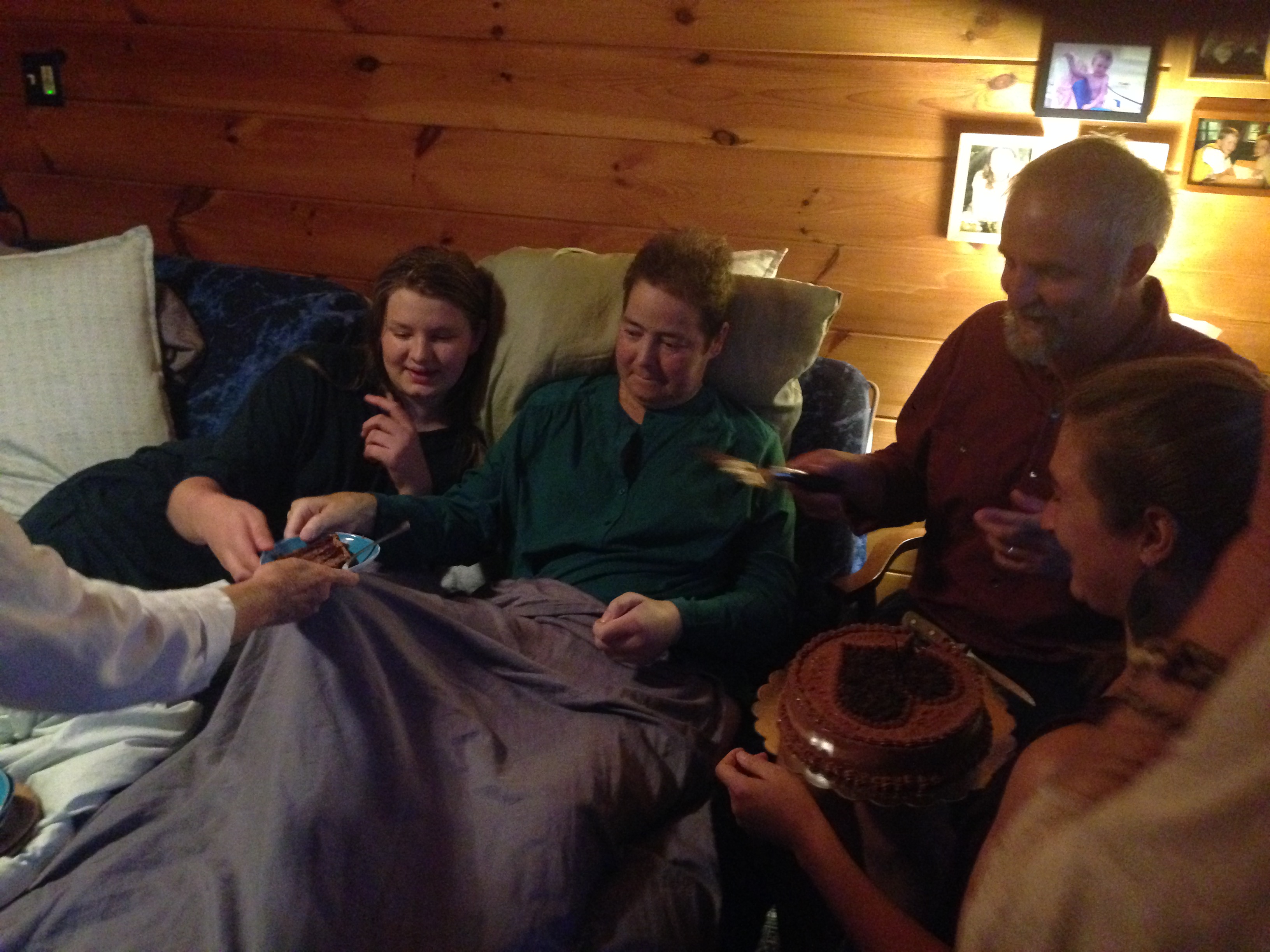
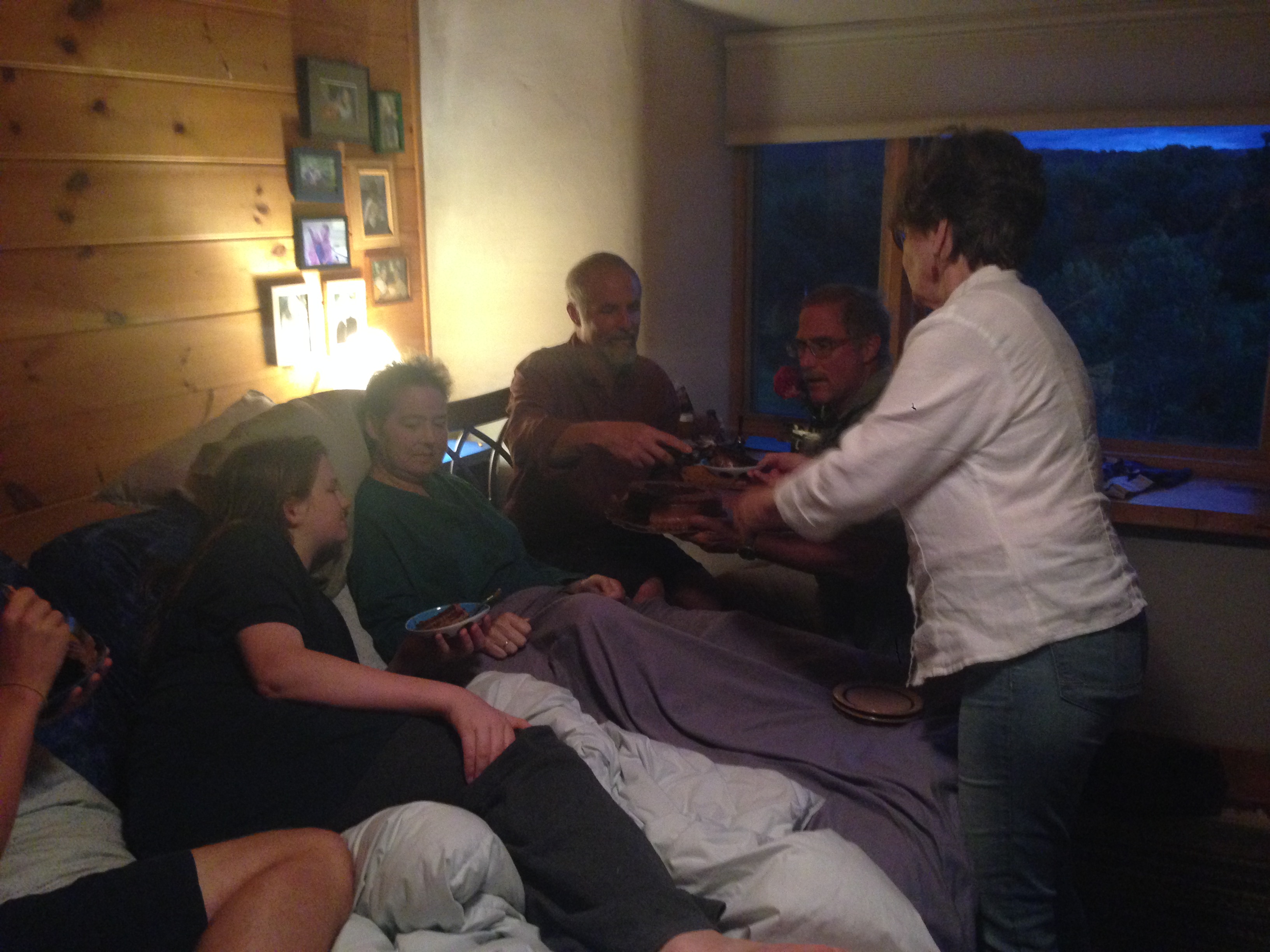
EKH 50th Birthday 2 Jesse, Ellen, Eric, and Natalie and Cake!

Ekh 50th Birthday 1 Jesse, Ellen, Eric, Jens, and Kathryn plus Will’s leg.

Two days ago was Ellen’s 50th birthday, a bittersweet marking on the calendar of her life.  How immensely grateful we are that she was born on that special day in 1966.

Gina baked and brought over the spectacularly delicious chocolate cake you can see in the photos.  Ellen did enjoy a bite of the cake, which is saying something as she’s choosing to eat less and less.  Ellen was alert and smiled quite a bit as we serenaded her, and we read her birthday wishes she’d received, and heard her birth story from Kathryn, a tradition in our family.

Yesterday, Ellen was officially admitted into hospice care.  Many people want to come say good-bye to Ellen and we are sadly saying “no” out of respect for Ellen’s clear instructions not to have visitors.  We have been flooded with offers to help in so many ways, and we thank you, even though we find we need little more than to be with Ellen on her journey.

Your love surrounds Ellen and us powerfully - thank you so much.

Challenges

by Ellen

My brain is less functional than before in these areas: keeping track of the day, date, and even month; peoples’ first names; medicine names; and how to run the very online writing workshop I designed and Eric and I wrote, launched, and upgraded over the last 10 years.  It is very depressing to try to do the few behind-the-scenes person-to-person functions with all the loss of ability.  Eric volunteers to do what I can’t, but then I don’t know whether things are done, and whether they are done the way I would want them done.  (That would be “the right way.”)

The same thing is happening all over my life.  Housekeeping, clothes-buying, finances, bill-paying.  The shift is challenging me to let up my grip, be okay with things done a different way than mine, and  trust Eric more than before in realms we both (I think) agree I am more skilled in.

Brief clinical updates

by Ellen

Just to share some clinical updates, since I am sitting here hooked up to chemo for what feels like the 8th hour in a row (it's actually only the beginning of the 4th hour but geez, they are running s-l-o-w today):

• intrathecal methotrexate has vanquished its target cancer cells for now—I am down to one MTX dose every other week from starting at 2 per week in the beginning of February.

• still getting combo of gemcitabine & carboplatin 2 wks out of 3. This switch from my original chemo, Eribulin, was made last fall. Eribulin sure worked for a long time (19 months?).

• still getting bone-building helper drug Xgeva/denosumab every 28 or so days too, because it might help prevent bone mets.

• I signed up with a palliative care nursing program and now I get seen by a visiting palliative-care nurse weekly at home, plus access to a physical therapist, social worker, and chaplain if I want. All at home which makes a HUGE difference. There are significant parallels between homebirth midwifery--all sorts of authentic midwifery--and hospice nursing care.  Of which this palliative focus is the first stage.

• through the palliative care program, I found a pain-management MD to handle all my pain problems/pain meds centrally.  Too bad she practices in Mass.!

• At her advice, I went off amatryptilline--one pain-relief med--and my increased dizzy spells decreased again, yay (both in frequency and in severity).  So I guess that was the final straw (many of my meds say "May cause dizziness").

• I switched in May from morphine to methadone for my main pain relief, hoping to get more solid relief with less fogginess.  So far, same level of incomplete relief, less fogginess.  So now we increase the dose to see if I can get better relief.  Areas that hurt: left knee, currently broken left foot, both hands (numb and clumsy and touching most things now hurts (like popcorn and velcro). Back less than before.  Headache much less than at its worst.

• The big thing going on, besides the 3 broken foot bones, is fatigue of both mind and body, and shortness of breath (likely due primarily to lung mets, but we'll find out more at my next scans).  I don't go out much.  When I do have a day that includes more than one or two events, I need to rest up afterwards--and beforehand if I'm smart.  I am slowly getting used to this.  It is still sad, though, how everyone around me has redefined a "big day" downward over recent weeks so that a current big day contains the same number of events an easy day used to contain.

What's been slowing me down

by Ellen

My weak left ankle turned outward on me for real last Friday, after weeks of threatening to do so, causing an impressive tumble to the floor in the bathroom.

broken? broken?

IMG_1952 Just wrenched and swollen?

By the next day it hurt in a bigger and more focused way, so off we went to the nearest Urgent Care place.

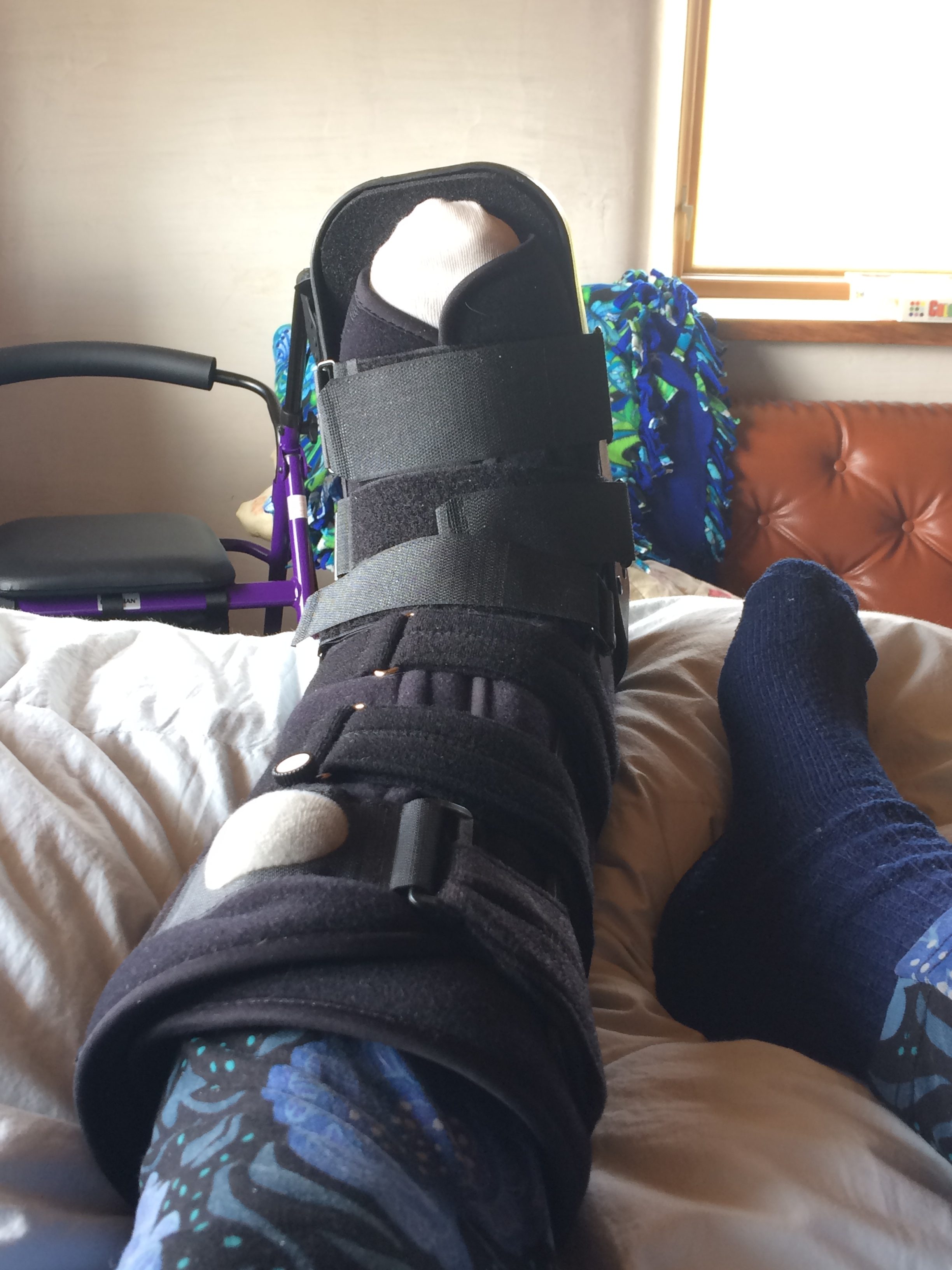
I will spare you all the details but after a visit to the orthopedist on Monday I now have this at the end of my leg for 6 weeks:

don't let the foot move! don’t let the foot move!

Makes everything harder.  I have to use the purple walker to take the weight off that foot and this coming week will rent a small wheelchair.  Sigh. How this affects our Montreal plans I am not sure yet.  Eric thinks we should just go anyway, June 3 through 6.  I don’t see why we couldn’t postpone the trip for a couple weeks, until I have less pain and hassle.

Mobility

by Ellen

I can’t walk well right now because of my numb and untrustworthy left foot and ankle; because I get big dizzy spells when I try to walk after sitting for 45 minutes or more; and because I get out of breath from just the effort of walking.

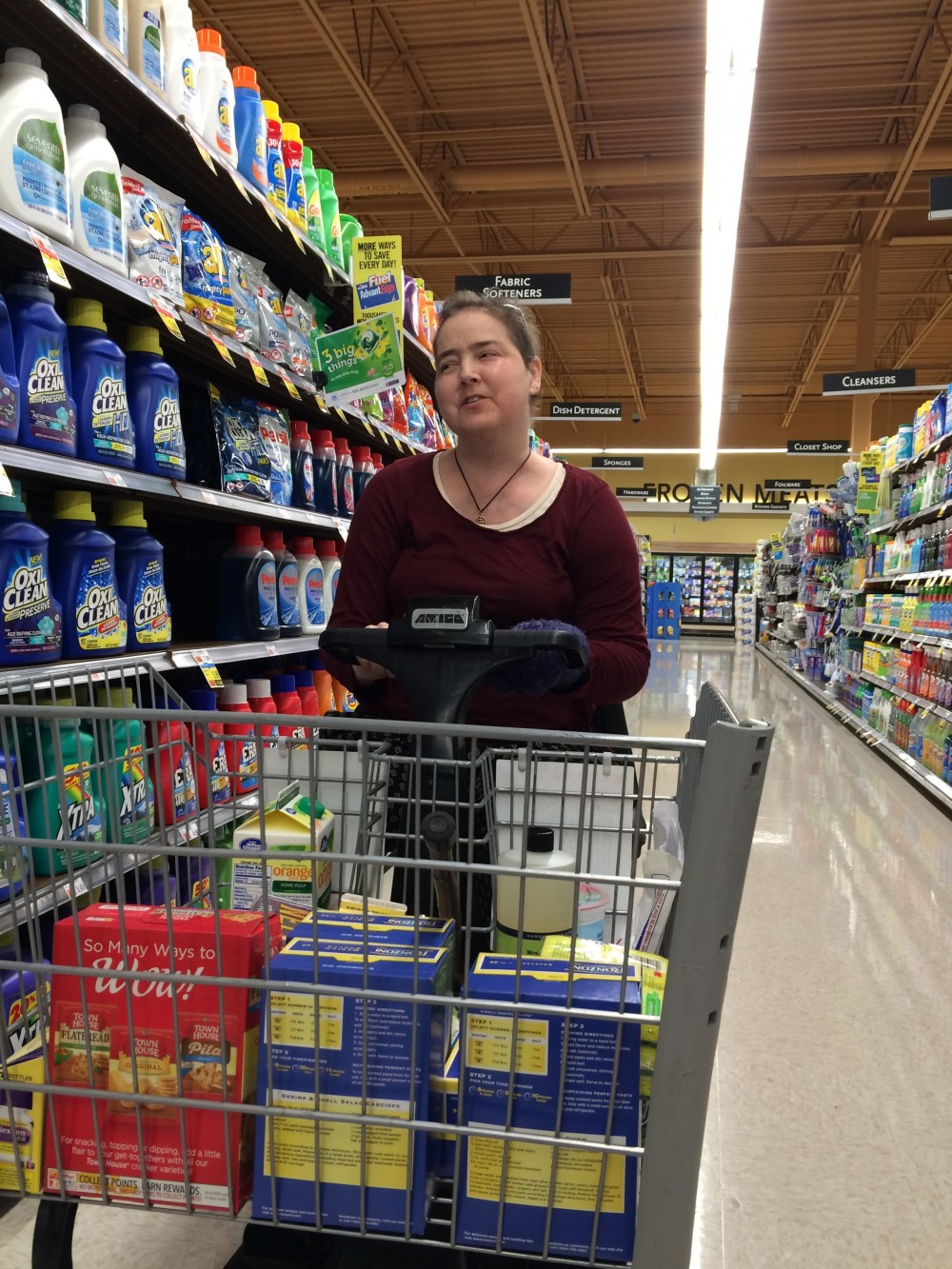
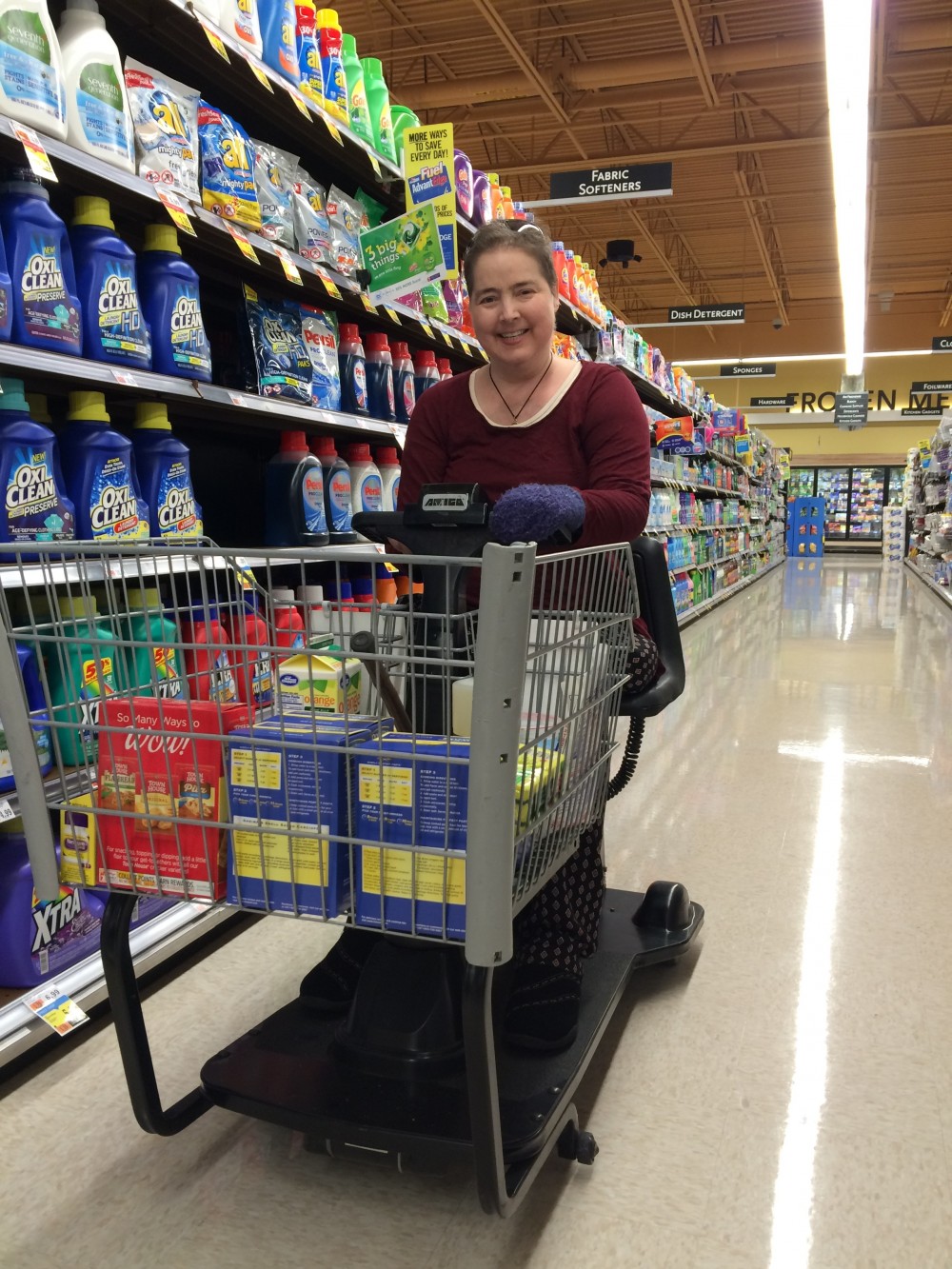
A few days ago I scolded myself silently, again, for being so darn stubborn, and used a motorized cart at the grocery for the first time. I don’t want to be seen as someone who needs one of these at the store.  But now I am.  It was helpful and I got to do the shopping with my friend Lisa instead of either wearing myself out trying to walk the whole store or waiting in the car.  And on my maiden voyage, aka learn to drive this weird vehicle, I only ran in to one thing.

Giving in to the cart Giving in to the cart

IMG_1850


And, and, and I actually ordered a walker today.  I was convinced to try it once I saw a model with a built-in seat–handy for dizzy spells–and made of purple anodized aluminum.

Mobility being my biggest challenge right now, I guess I will throw tech at it.

Frustrations abound

by Ellen

Living my life has become what I’m trying to think of as The Ellen Project, which I used to be able to manage on my own but now often need help with.  Here is a whiny gallery of my daily challenges and–usually–frustrations related to my neuropathy-damaged hands..  There are many things I can no longer do for myself…big and small…or tasks that take 3-10 times longer than before, and maybe hurt along the way.

Mouse over the pictures for a quick description.  Click on the pictures to read more about them.  I will be adding to this gallery of woes as they stymie me.


Last week's round of imaging to see what's what

by Ellen

****Last week's 3 CT scans showed some response to the new (since-December) chemo combo in my chest/abdomen/pelvis: very good news, though not all the new mets are gone.  Some are just unchanged or smaller.

My various brain/spine MRIs showed leptomeningeal effects still in the central nervous system but nothing worse than late January when we started the intrathecal Methotrexate twice a week.  My MRIs showed a variety of effects in the brain, always so hard to puzzle out because so much has occurred in there over the last 2-3 years, but nothing too alarming.

Brief update

by Ellen

Chemo vs. scans to see what’s been accomplished inside of me :)

I also have 3 cranio-sacral therapy appointments set up for March to work on my spinal cord and brain from a different angle.  Back when I made the appointments in early February, before starting I didn’t really know whether I would still be around for them.

Ups and downs

by Ellen

The last few days have been frustrating because just as I felt like I was getting substantially better in the strength and muscle department,  I lost some of it somehow. My thighs were no longer able to get me to a standing position without pushing with my arms, and my knees kept wobbling out on me unexpectedly. I was back to 2 feet on each stair instead of 1 foot per stair.   And on Saturday my vision got weird – my left eye is a little out of sync.

Meanwhile, my voice seems to have gotten weaker and more ragged. Last night when we went to a Buxton event, no one could hear me talking unless I really pushed my voice hard.   And just sitting and talking seems to wear me out more now than it did before–or maybe I’m just noticing it more and taking care of myself better.

I am less sturdy on my feet again and needing help with dizzy spells and sometimes getting up and down. Which sucks, because I really was climbing out of that place for the last few weeks.

On the bright side, though, both Will and Jesse are home for spring break now so our house is full. And my friend Leigh is coming today to visit for a few days!   I hope I don’t have to spend too much of that time resting.

Death Straight Talk (by Eric)

by Eric

When your wife has stage 4 metastatic breast cancer, and has been hospitalized once for an upper extremity DVT, once for pneumonia, another time for malignant pleural and pericardial effusions, has had small pulmonary emboli, and then gets diagnosed with leptomenigeal carcinomatosis, and you also live in a world that has Google, so you can type in those terms (or worse click on the links some idiot put in a blog post) and get very detailed descriptions of these diagnoses and, more importantly, their prognoses, then, despite the doctors not coming right out and telling you so, you kinda have to face it that the most likely hand you’ll get dealt this year is to watch her die. Not just the mostly likely hand, but the most likely 99 hands.

We’ve tried from the start (of the stage 4 diagnosis), before the more in-your-face evidence (which for me was the hospitalizations) not to live in denial, and not to keep things from our two teenagers or our family or community. To make decisions taking this possibility/probability into real account. But this turns out to be much more difficult that I expected.

DST stickerSo this post is about a concept called Death Straight Talk (let’s call it DST. That way it sounds like the more familiar “DNR”). There are three arenas in which I want to talk about DST: 1) the medical world, doctors, nurses, and Medicine as an institution; 2) family, friends and community; and 3) the metaphysics of probability and how we think about our future. So here we go.

1) DST in Medicine: Hospice operates on an agreed-upon basis of DST. The idea is that “there’s nothing left to do” to prolong life (meaningfully), so shift the medical care to comfort, pain control, and getting the most of out each day. A Do Not Resuscitate (DNR) order is another form of DST in medicine, where the patient gets to issue a token that goes in their chart saying something like, “Look, I’ve thought this through and I’ve come to the conclusion that death is preferable to life after resuscitation, so let me go.” These are both DST items that have been embodied in institutional practice, the first at a more macro level, because, it turns out, Hospice care ties in deeply to the structure of how and what things get paid for and who gets to decide. (This in itself is worth a whole other post, but life’s too short for me to dig into that.) The second is at the more micro level, because it’s just about what to do under certain circumstances for an individual patient, whether in hospice or not.

These two patterns, Hospice and DNR, are formal recognition that near death, things are different, and we have to act differently. But now to my direct experience: despite an ominous prognosis, Ellen’s not at either of those two points yet, and so, institutionally, there’s practically no DST. It’s like a binary switch: either we act like you won’t die, and plan our doctoring on that, or we finally give up and off you go to Hospice. Here’s how this plays out. Hospitals are places full of protocols: vitals every 2 or 4 hours, neurological checks every hour, gotta pee before you get discharged, NPO (nil per os – no food or drink) before surgery, start a bag of fluids for practically anything, keep for observation for two days after X surgery, don’t go off the floor (or out of the ward doors), and on and on. Lots of protocols, mostly in place for good reasons.

But here’s the question: if you might have only 4-6 weeks left of life (if the current spread of cancer doesn’t respond to therapy) do those protocols apply? Should you really spend those two days under observation, living a substantial percentage of your remaining life in the hospital instead of at home? Should you really have that conversation you’re having with your family or friends interrupted so the nurse can write down your blood pressure numbers? Should you really have to spend the more than an hour a day (once you add it up) explaining your complex medical history over and over to each new nurse, resident, attending, etc., who comes to check up on you? Should you really get filled with IV fluids before a surgery to offset the dehydration risk that comes from the NPO protocol, which is there to mitigate the risk of throwing up under anesthesia, when those same fluids have a high risk – shown in the previous hospitalization – of causing swelling in your legs and feet which might make it painful to impossible to walk in your last weeks of life?

In our experience the protocols just don’t take into account DST. Here’s how I know: during our last hospital visit, I explicitly told nurses and doctors a story that approximately went like this: “Please treat us as if Ellen’s chart had a big DST sticker in it. It’s kind of like DNR but stands for Death Straight Talk , which, like a DNR, is treatment instructions for you from Ellen, but what it means is: first of all, we can, and do, talk about death straight, but second and more importantly, in providing your care, think about whether your actions are appropriate for someone who will likely die soon.”

The results of telling this story were clear: after some initial shocked looks, we got different care. The doctors let us go home “early” after Ellen’s Ommaya reservoir implant; we got “off-floor-privileges” while awaiting surgery; they didn’t make Ellen start on fluids at midnight before the surgery, etc. The humans involved responded deeply and with compassion to the truth that was embodied in a simple acronym: DST.

2) DST with family, friends, and community: If you want to create drama, lie. Lie explicitly, unconsciously, or by omission. In our case, we might call that Death Curvy Talk, or Death Denial Talk (DDT). The other night Ellen and I watched a dumb movie called “Meet My Valentine,” which is about a guy diagnosed with terminal brain cancer who decides not to tell his family but instead find a replacement husband/father for them instead. As a movie it was really dumb because that DDT was so obviously poisonous. But as a metaphor it’s revealing. If I look at where things feel twisty and drama-filled and out of whack, I see that I haven’t lived up to DST. As I said at the beginning of this post, we’ve tried to face things directly from the start. But something interesting has happened since the introduction of the DST acronym. As a token that we can refer to, it’s given us permission, or an opening, or something to actually get to to the straight talk more quickly. Now that it’s there, we invoke it. “Hey, I have a DST thing…”

Here’s a quote from an e-mail from a friend: “I wanted to offer to help, if need be, to begin/continue/whatever, discussion of burial, funeral directors etc. I have, unfortunately, intimate experience with this recently, as you know, and might be able to bring some perspective to this part of DST.” What a relief and and efficiency that this provides. It feels to me that the more I live into DST, the more this experience goes from what I call “dramatic” to what feels “powerful” or “moving.”

3) DST metaphysics and probability: Here’s the problem with DST. It assumes we know the specific future. Of course in one sense we do. All of us will die, we know that, but that’s hardly a specific knowing. So, using DST, how do we also talk straight about that one other hand of cards out of the 100–the one in which it turns out that Ellen recovers and later quietly dies in her sleep at the ripe old age of 103 well after I’m gone? This is the hard part for me. I used the metaphor that Ellen’s disease prognosis is like drawing a hand of cards. But that’s, at the very best, only a partially valid metaphor. Probability provides a great tool set for assessing aggregate outcomes, but it also can have the effect of deep dis-empowerment at the individual level. Just because your chances of getting breast cancer go up by X% if you have the BRCA1 mutation doesn’t mean that you don’t have any agency in whether it actually happens in your own body. From all our reading, it’s pretty clear to us that cancer as a bodily process is connected to the immune system, which is deeply connected to the central nervous system, and also connected to physiological terrain. So what power does that mean we actually have? I believe that diet, and stress, and my thoughts have an effect on “my chances” of getting cancer, and these are things I have control over. Bookstores, however, are filled with conclusions from this that to me are just magical thinking: that you can just think yourself back to health. But I also read and hear people jump to “don’t blame the victim” as soon as you mention the ways in which we do have agency. It’s kind of a double bind: if you believe in agency, then if you got sick or don’t heal yourself it’s your fault. But if you just take it as luck of the draw (i.e., not your fault) then how can you activate where you do have agency?

So to me this is where I don’t know how to have real DST. What is the “straight talk” that both acknowledges and deepens the agency we do have, and yet doesn’t fall prey to either magical thinking or blame-the-victim? Just because the odds are 99 to 1, does that mean we have to match the relative percentages of our talking time to those odds?

I don’t know the answers to these questions. But the core move in DST gives me guidance: open myself to what exists, or at least turn towards it rather than away.

Modern disease prognoses provide odds based on existing historical records: scientific studies. Open myself to them. But also the evidence of agency affecting cancer outcomes exists. Open myself to it. My pain and my joy in these days exists. Open myself to both of them. Paradoxically, denial and hiding and self-veiling also exist. So that’s OK, too; turning-toward will also periodically involve turning-away. This isn’t about some moral claim. It’s just a wish, a longing, perhaps a stance, to turn towards what I see in front of me. DST. Last words: just because I don’t wish to turn away from that which I do see, that doesn’t preclude me from turning toward that which I don’t see: all the potential branches of the future. Because what else is creation?

–Eric Harris-Braun

Chemo-day update

by Ellen

About today and my current chemo schedule etc.:

After all of this, I felt a little queasy and rested In the car all the way home. But then I walked from the parking area to our house, ordered some food stuff from Eric, and marched up the stairs wearing my back pack foot-over-foot like a normal person (1 foot per stair).  Also, Spee and I took a 15-minute walk on the road in the snow just before Eric and I left for Albany. So although I am tucked into bed right now, I am feeling like I had an energetic day.

That walking up the stairs with the fullback pack myself was a first since early December. Never discount how bad pedal edema can be for your strength and health, That’s my device.,

Speaking of advice, at the end of our time with the nurse practitioner, I offered again my attention as a midwife, since she is due with baby number two in April and not having a very happy pregnancy. So I didn’t push. But she took me up on it today and we talked about the recommendation that she be induced for this baby because her first baby came pretty fast. She lives 20 minutes from her hospital. It was a very fun conversation to have because I got to use my midwifery skills right on the spot.

Now I’m back to resting my brain and body in bed with Eric next to me.

Shaker Lemon Pie story, plus.

by Ellen

Thanks to good drugs, I had no nausea or vomiting after my double chemo last Thursday. Go, Emend! I don’t care how expensive you are–I love you.  I do seem to be more worn out than usual.  Or than I expected.  Since my legs felt stronger, I went for a walk beyond the mailboxes on Thursday or Friday, and I made it back! With a few rests. But this weekend I have mostly sat around and indulged in Netflix, at least when not learning new blog posting technologies such as below.

In general, though, I feel all right and I’m doing pretty well at taking care of myself except for the things that require two functioning hands. Unfortunately, this includes putting on most shirts and other important self-care tasks. My hands are damaged from chemo-induced neuropathy and we don’t know yet whether, now that I’m on a different chemo regimen or two, they will get worse or better. My feet are still pretty bad, especially the left one, which feels like a block of tingly wood that does not want to be touched.  That left foot is the major cause of my unsteadiness walking.

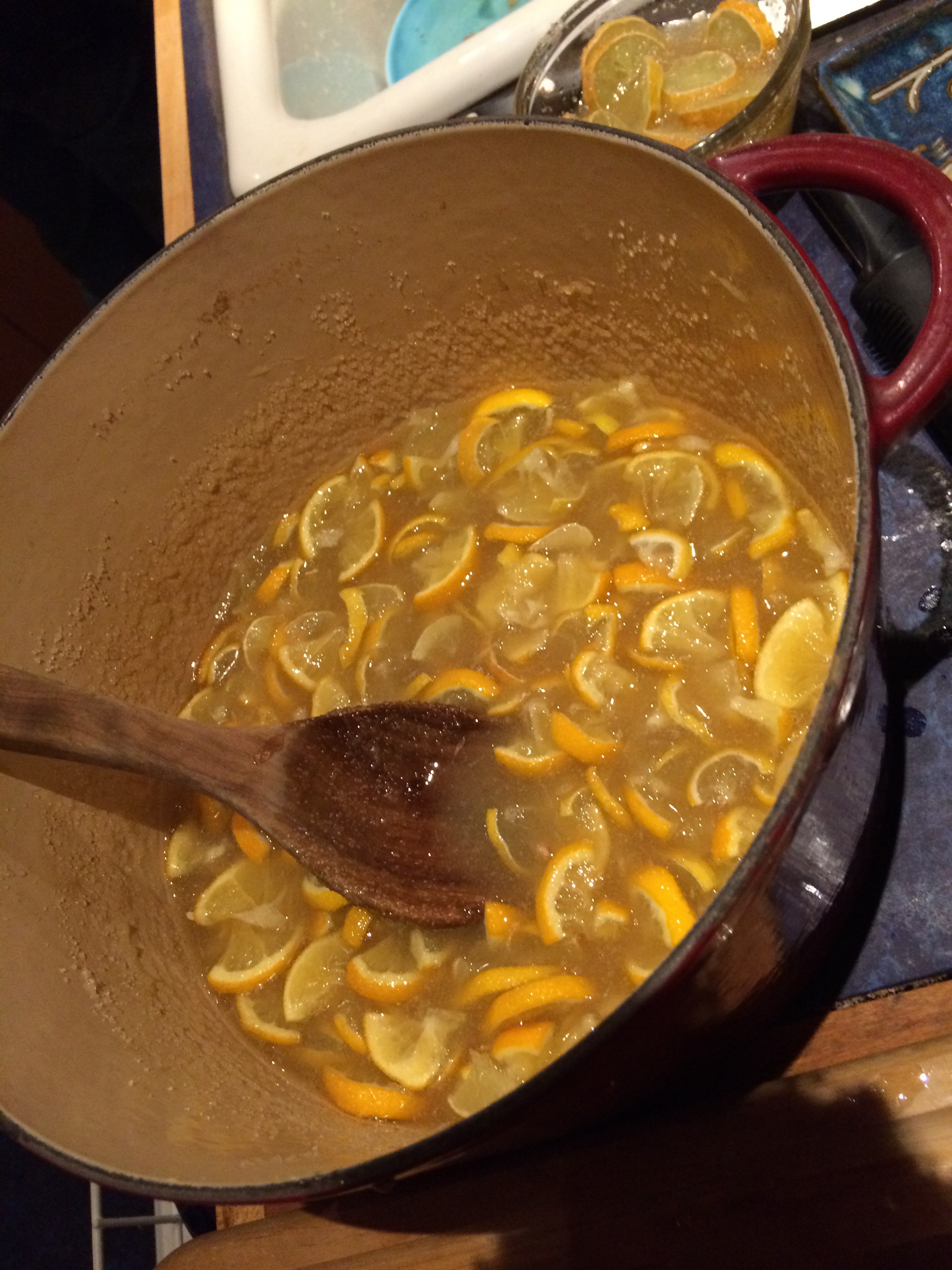
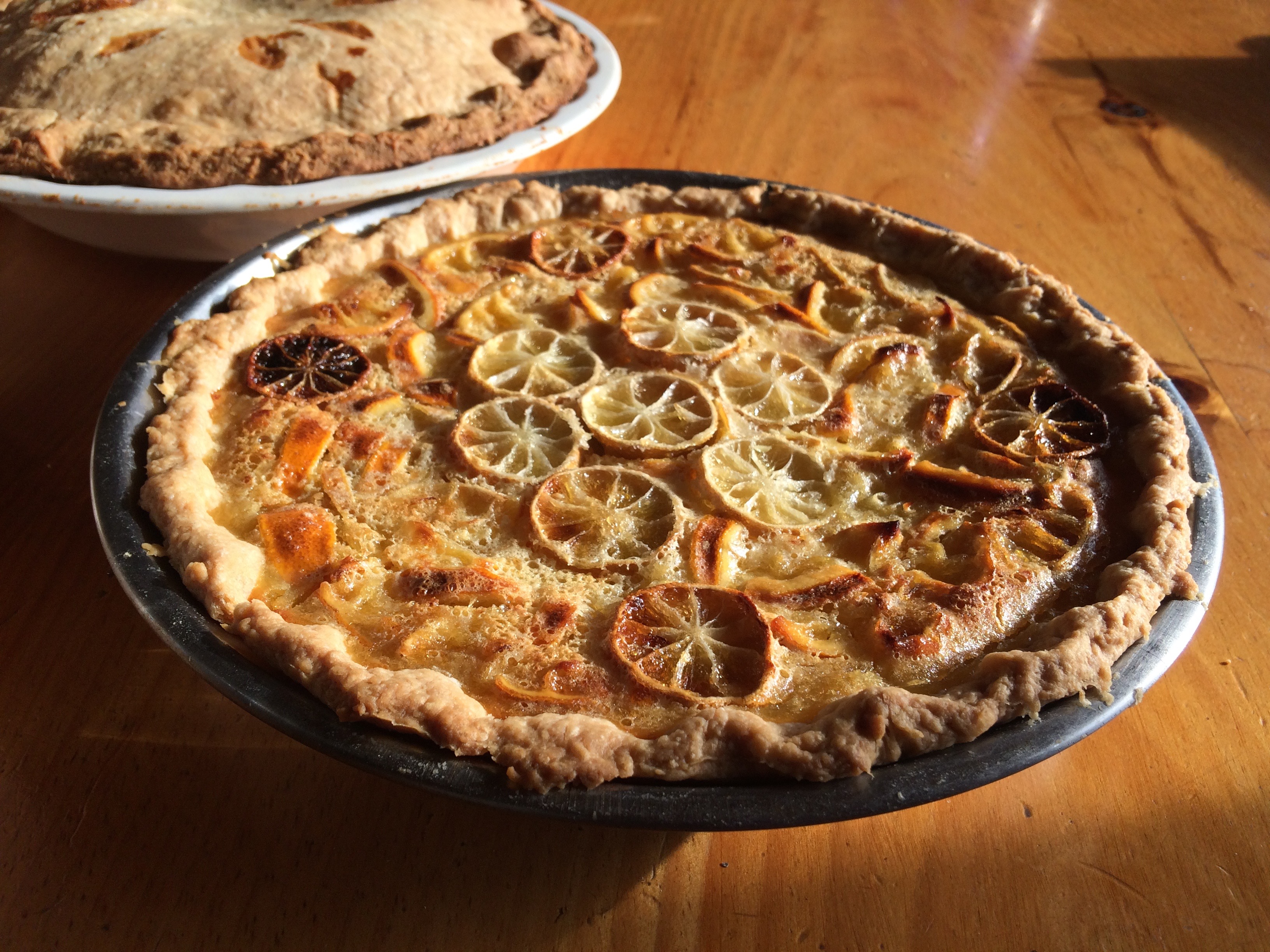
Here is last week’s community Shaker Lemon Pie story out loud:


Lemons and sugar Lemons and sugar

IMG_1425 One-crust pie


IMG_1426 Two-crust pie

Still in the hospital, but otherwise great

by Ellen

Perhaps you are wondering how this latest day stuck in the hospital went.  Here's the report!

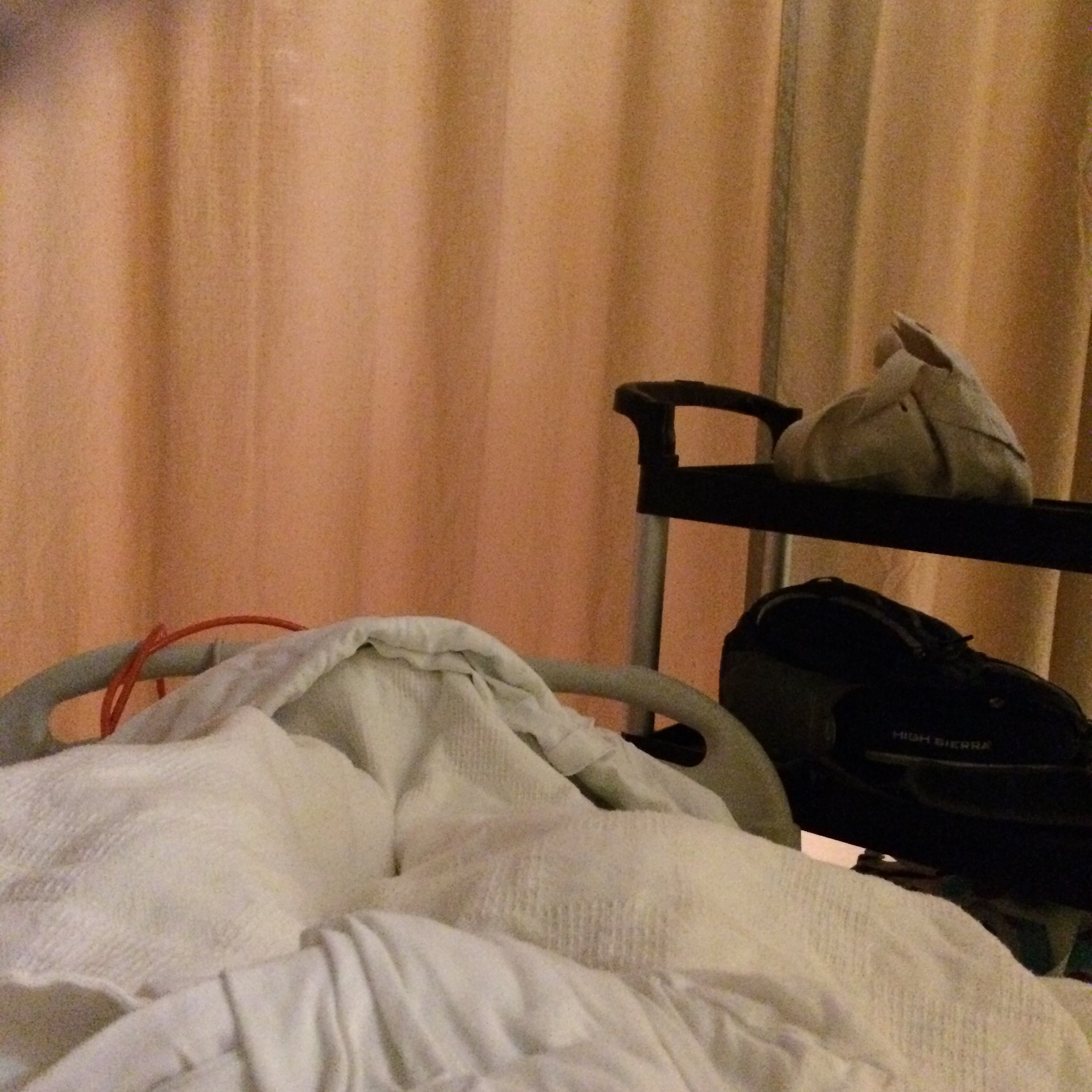
First night in the private room First night in the private room

Yesterday's final CT scan showed the bleed beginning to resolve.  Yay! So all was set for surgery today.  I was NPO--no food or drink--from midnight on, but got permission to skip the all-night IV fluid drip because of my previous horrible hospital-acquired edema  that pretty much disabled me for 3 weeks.  Then they kinda had to let me have ice chips this morning.

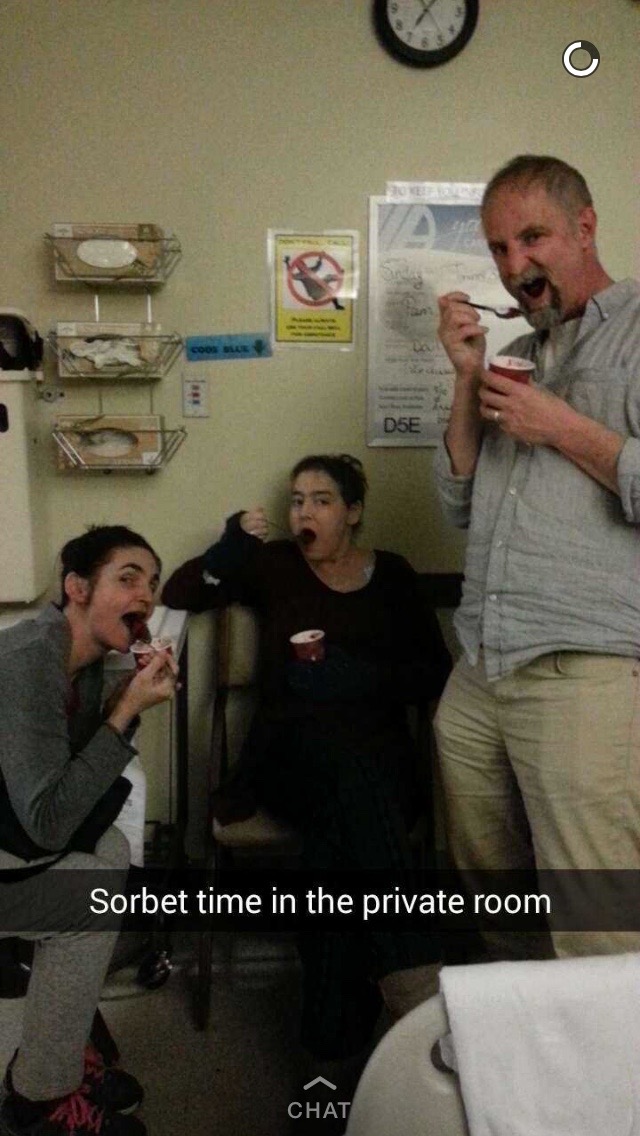
Surgery went well around midday and now—after 10 pm—Eric and I are in my observation alcove for the night (no more private room) and are enjoying ice cream after a delicious and long-awaited Panera soup, salad, and bread-and-butter dinner.  I think I ate enough to make up for all day’s no-food order!

We’re going for a walk around the floor soon, before Eric leaves for the night.  We walked 0.6 miles this morning before it was suddenly time to go to surgery.  I am feeling stronger in the legs every day, even in the hospital,

After he goes…*New Yorker* or Netflix w/ headphones until the dexamethasone I took late at 6 will let me fall asleep.  Patients in the neighboring alcoves seem to want the TVs on, even this late, so I will need the earplugs I received a few nights ago in an earlier loud alcove room down the hall.

We expect discharge tomorrow, whether early or late in the day.  Eric will be back in the morning to wait it out with me. Normally someone post-op with a brain bleed might be kept an extra day or two for Heparin and observation...but my neurosurgeon said he and my oncologist agreed they could only push me so far.

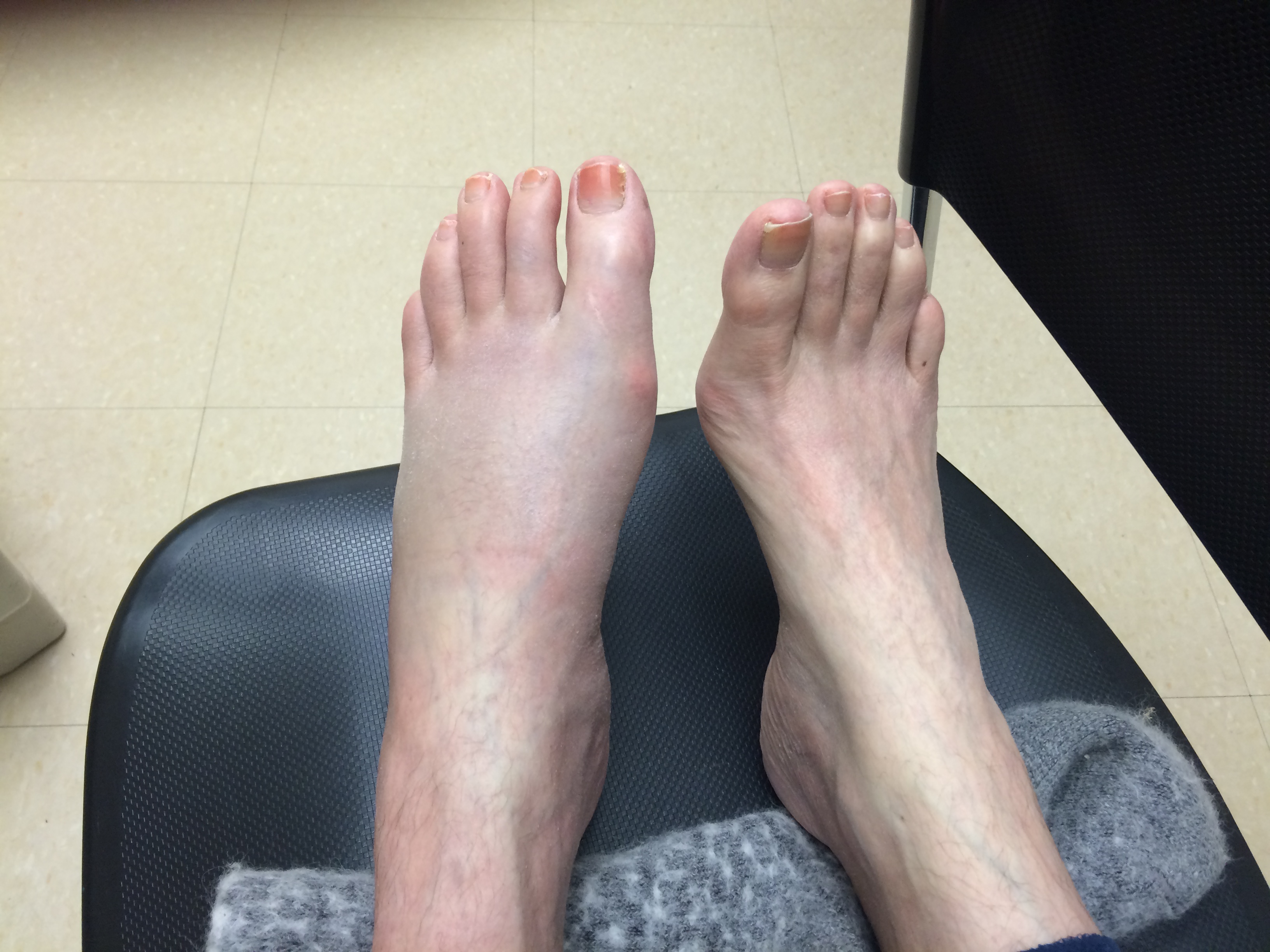
hidden toes hidden toes

badass selfie! badass selfie!

Latest not-at-all greatest developments

by Ellen

The results of my recent MRIs were not good.  The pelvic MRI to see what might be causing left leg pain showed "patchy areas" in the cauda equina (nerves just below the end of the spinal cord). That worried everyone and triggered a quick repeat brain MRI and a cervical spine MRI to look for more deposits or "thickening" in various places.  Both showed evidence of more cancer-cell deposits on the lining of the spinal column and brain, which can cause swelling that impinges on nerves and do other damage to the nervous system and the brain.  Cancer in the cerebro-spinal fluid, which is called leptomeningeal carcinomatosis or leptomeningeal disease (LD), is just about the worst development in metastatic cancer.*  

Eric and I talked with my oncologist for half an hour Saturday morning (he gets called at home with bad results). We discussed treatment options and the option of no treatment--because the one standard treatment for LD only works half the time and has nasty side effects.  "Works" means you maintain the function you have--people don't (usually) get better from this.  Life expectancy with no treatment is only 4-6 weeks.  Life expectancy with standard treatment, according to one study, was a median of 7 months for LD from breast cancer, and shorter for LD from other common cancers. 

So that's sobering.  We had lots of questions and called him back that night to discuss them.  But basically I just don't think...or feel...that it's time to give up yet. 4-6 weeks?  I will try for those extra months as long as my quality of life is still decent despite side effects--headache, nausea, vomiting.  And more trips to Albany; twice-weekly chemo delivered--here's the cyborg part--directly into my brain via a "reservoir" under my scalp, connected to a tube that reaches into one of my large ventricles.  That way the drug can be infused directly into my cerebro-spinal fluid (CSF).  It's called an Ommaya reservoir but I just call it the brain port.

I'm also planning to try taking penfluridol, an old oral antipsychotic drug that seems to kill triple-negative breast-cancer cells...apparently in people (retrospective study) and definitely in mice (randomized controlled trial). Would that I were a mouse. But at this point I'll try it anyway if I can.  The exciting thing about this drug is that it acts in the brain perhaps even more strongly then in the rest of the body. Most chemotherapy drugs, by contrast, do not cross the blood-brain barrier at all.  So for someone with cancer in the body and worse cancer In the brain, it seems worth it to start acting psychotic right away.

There don't seem to be cutting-edge or novel ways to treat leptomeningeal disease that are being done at bigger cancer centers; the standard of care is methotrexate everywhere, It seems. Eric and I were exploring the idea of going somewhere bigger and busier to deal with this complication because a place like Dana-Farber would probably have more experience with LD than our one oncologist here in Albany. But that introduces the need to drive long distances for treatment, which decreases quality-of-life quite a bit. We also asked about and looked into clinical trials but have yet to find anything that fits.

We are still draining my left lung every three days and the amount of liquid is going down, Which may mean that the chemo I'm on now is working to kill off little cancer cells. Cross your fingers!

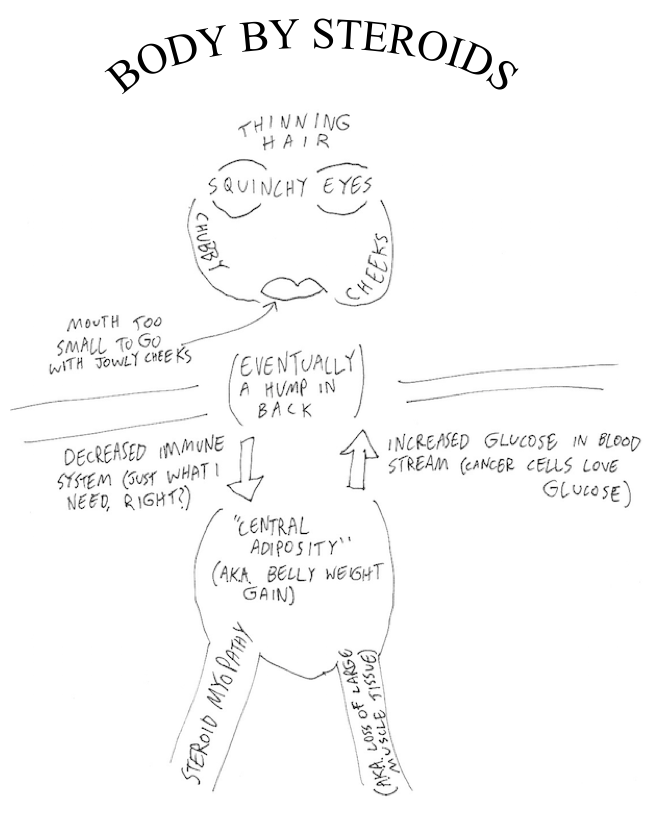
I am now back on high-dose steroids to decrease brain and spinal-cord swelling, Which could mess with my nerves or cause a seizure. No one will ever see my cheekbones again. I am very sad about this. And a lot of me does not quite believe how this is going–that is, about as badly as it could go. But on the other hand my foot edema is gone and my daily headaches went away and although I have LD, it does not seem to be kicking my butt with its patchy deposits at the moment.

More later on all the thoughts this makes us all think...

*LD is more common now that more women are surviving longer with metastatic disease--the cancer has more time to find its way into the CSF.

Palliative care

by Ellen

What comes out of my pleural space What comes out of my pleural space

This morning we had our first visit from a palliative care nurse.  We got set up with the Visiting Nurse Association for oversight of the lung-draining process, which continues every other day for now.  Then we found out that the VNA also has a palliative care program so we signed up for it. Now we have someone who can help us investigate various pain-relief options and also set me up with a visiting occupational or physical therapist who can help with my left hand. As part of this they offer something called anodyne therapy which I had never heard of, but which looks like it might help my hand pain. Anybody ever had any experience with this kind of treatment? It seems to work by increasing circulation.

She also gave me yet another end-of-life document to fill out: a MOLST or Medical Orders for Life-Sustaining Treatment. ****I thought all my work on the Five Wishes document was all I needed to do, but apparently not.  So I will tackle that eventually.

The foot and leg edema that was an unfortunate gift of my last hospital stay is getting better slowly. My right leg and foot are pretty much all better and that leg feels stronger lately too.  My left leg is no longer swollen but my left foot is still kind of a puffy mess.  Yesterday when we went to the office of the compression-garment expert, I not only got a compression glove for my left-hand–to address the edema in my fingers as well as protect that hand from accidental touching–but we also asked her advice on the foot edema. We have been getting different stories from different semi-experts about what might help besides elevation and eating lots of protein. She suggested a compression stocking and explained why there’s no such thing as a compression sock. She had some samples, so now I have a pair of nice black light-compression knee-high socks and I think wearing one is already helping the foot a little bit.

Eric goes to California on Sunday for a week and my mom comes Sunday night for the duration. I am lucky to have so many retired and self-employed people in my family who can come visit when it’s needed!