Guest post: Jesse's perspective
Jesse says:
When a house has cancer in it, what does it have too much of?
- Cancer.
- Visitors.
- Prescription medicines.
- Meatloaf.

WORLD OF THE SICK / WORLD OF THE WELL
breast cancer...again?
Jesse says:
When a house has cancer in it, what does it have too much of?
Just to share some clinical updates, since I am sitting here hooked up to chemo for what feels like the 8th hour in a row (it's actually only the beginning of the 4th hour but geez, they are running s-l-o-w today):
• intrathecal methotrexate has vanquished its target cancer cells for now—I am down to one MTX dose every other week from starting at 2 per week in the beginning of February.
• still getting combo of gemcitabine & carboplatin 2 wks out of 3. This switch from my original chemo, Eribulin, was made last fall. Eribulin sure worked for a long time (19 months?).
• still getting bone-building helper drug Xgeva/denosumab every 28 or so days too, because it might help prevent bone mets.
• I signed up with a palliative care nursing program and now I get seen by a visiting palliative-care nurse weekly at home, plus access to a physical therapist, social worker, and chaplain if I want. All at home which makes a HUGE difference. There are significant parallels between homebirth midwifery--all sorts of authentic midwifery--and hospice nursing care. Of which this palliative focus is the first stage.
• through the palliative care program, I found a pain-management MD to handle all my pain problems/pain meds centrally. Too bad she practices in Mass.!
• At her advice, I went off amatryptilline--one pain-relief med--and my increased dizzy spells decreased again, yay (both in frequency and in severity). So I guess that was the final straw (many of my meds say "May cause dizziness").
• I switched in May from morphine to methadone for my main pain relief, hoping to get more solid relief with less fogginess. So far, same level of incomplete relief, less fogginess. So now we increase the dose to see if I can get better relief. Areas that hurt: left knee, currently broken left foot, both hands (numb and clumsy and touching most things now hurts (like popcorn and velcro). Back less than before. Headache much less than at its worst.
• The big thing going on, besides the 3 broken foot bones, is fatigue of both mind and body, and shortness of breath (likely due primarily to lung mets, but we'll find out more at my next scans). I don't go out much. When I do have a day that includes more than one or two events, I need to rest up afterwards--and beforehand if I'm smart. I am slowly getting used to this. It is still sad, though, how everyone around me has redefined a "big day" downward over recent weeks so that a current big day contains the same number of events an easy day used to contain.
…They all seem to run on nut butter.
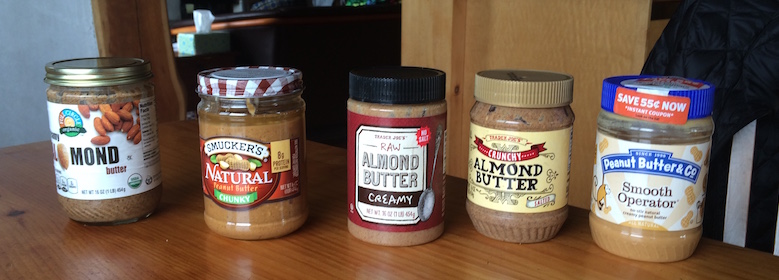 Nut butter mementoes left by our helpful visitors!
Luckily none of these many varieties goes bad in the fridge.
My weak left ankle turned outward on me for real last Friday, after weeks of threatening to do so, causing an impressive tumble to the floor in the bathroom.
 broken?
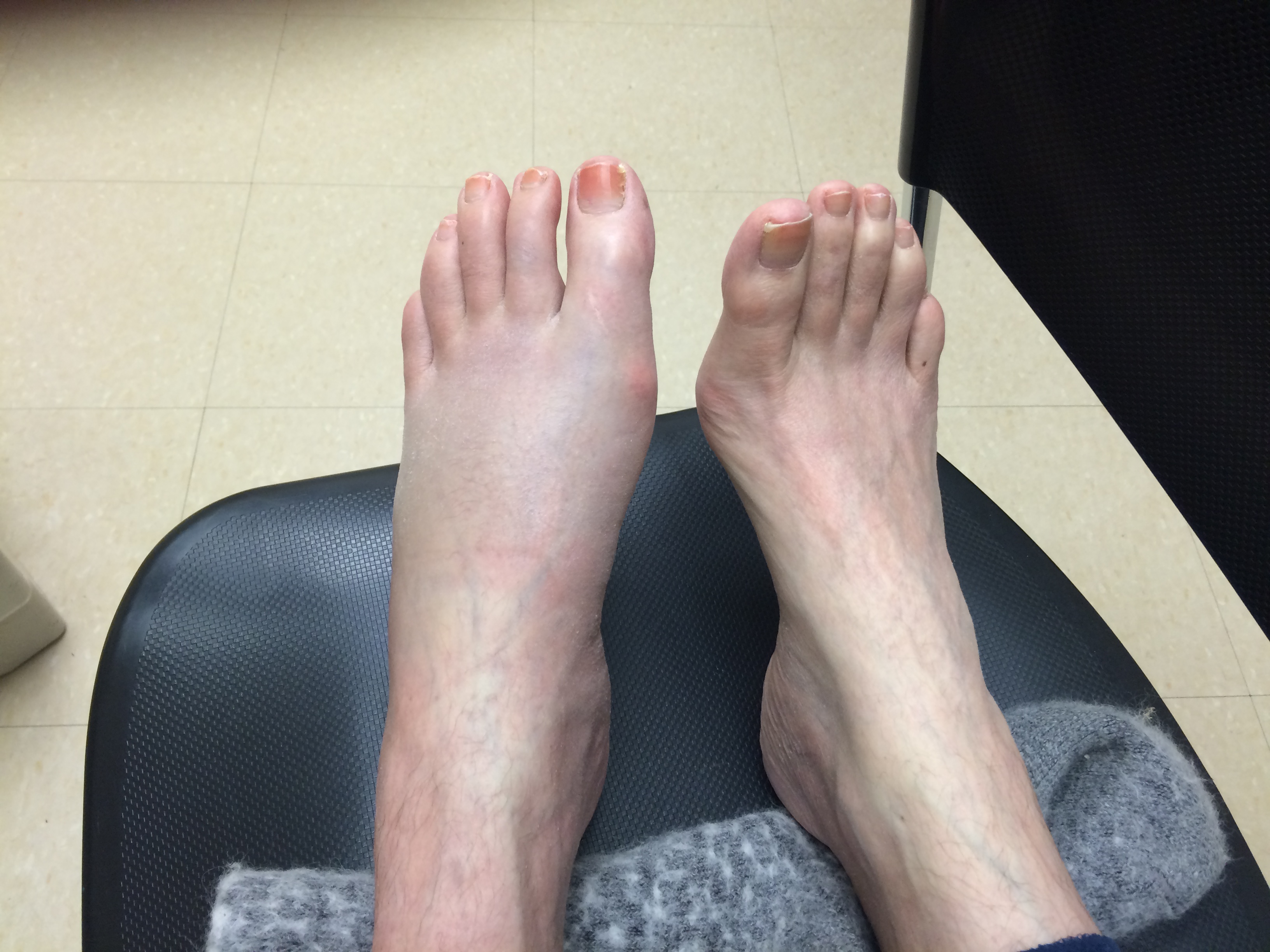 Just wrenched and swollen?
By the next day it hurt in a bigger and more focused way, so off we went to the nearest Urgent Care place.
I will spare you all the details but after a visit to the orthopedist on Monday I now have this at the end of my leg for 6 weeks:
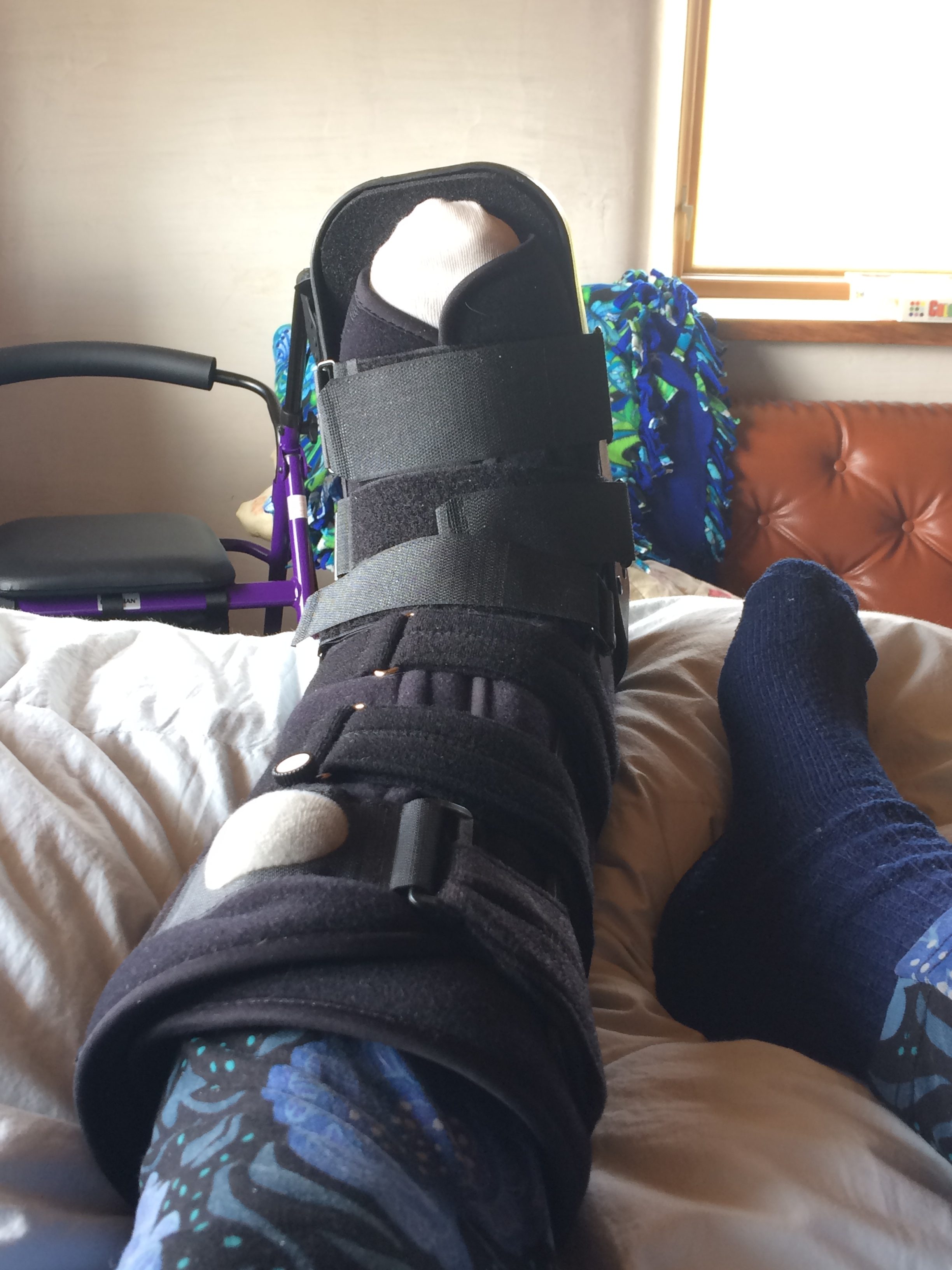 don’t let the foot move!
Makes everything harder. I have to use the purple walker to take the weight off that foot and this coming week will rent a small wheelchair. Sigh. How this affects our Montreal plans I am not sure yet. Eric thinks we should just go anyway, June 3 through 6. I don’t see why we couldn’t postpone the trip for a couple weeks, until I have less pain and hassle.
Life keeps trickling by with nothing that calls itself out as news-worthy. Aka blog-worthy. The bar is higher now that one-handed hunt-and-peck is my main route of written-word production. Using dictation software is also an option but it is hedged about with caveats and requirements. I don’t always feel comfortable spooling along my thoughts for this blog aloud with others nearby. If I am dictating and people walk in talking, the software picks them up and plops in some garbled version of what they were saying. And even when it’s just me there are lots of errors to fix.
Yesterday was the International Day of the Midwife so maybe it’s time to share a bit on my midwifery research project that is on hiatus now but may someday be…rehydrated?…and back on the to-do list.
When I was diagnosed with metastatic breast cancer, I was about 2/3 through with a distance program for CNMs and CMs offered by The Midwifery Institute at Philadelphia University. I had been hatching my own research study based on my Philadelphia University research project, but I realized when presenting my work so far at the 2014 MANA conference that my results really weren't a strong argument without better data. Luckily, as one of the architects of the MANA Stats Project, which provides a way practicing midwives can provide high-quality data on their care, I saw that where my data was lacking was also a general lack in the quality of our data. So we on the MANA Stats team added a few more questions and as of about a year ago, we have been collecting data that will work much better when analyzed for my length-of-pregnancy project.
I am excited about myself or somebody else re-running my study with this better data whenever it has been validated and can be used for research--pretty soon now, I think. That will be a big accomplishment, if I make it that far with enough mental stamina to keep on track doing that kind of analysis and writing. I will have help from my researcher friends who volunteer with me on MANA's Division of Research. However, one thing I realized when I presented my work so far at the 2014 MANA conference, to an audience of about 40 very interested midwives: that was maybe one of the best 90 minutes of my life. So even if I don’t get to continue with this particular project, I feel like for me that was the apex of it and I got to experience it without any compromises. I guess in some ways I am a teacher at heart.
So that’s what’s going on in the currently offline research mind of this "midwife scholar.” Philadelphia University was sad to lose me as a student but they named a new research award after me to keep my name around. First recipient? Me!
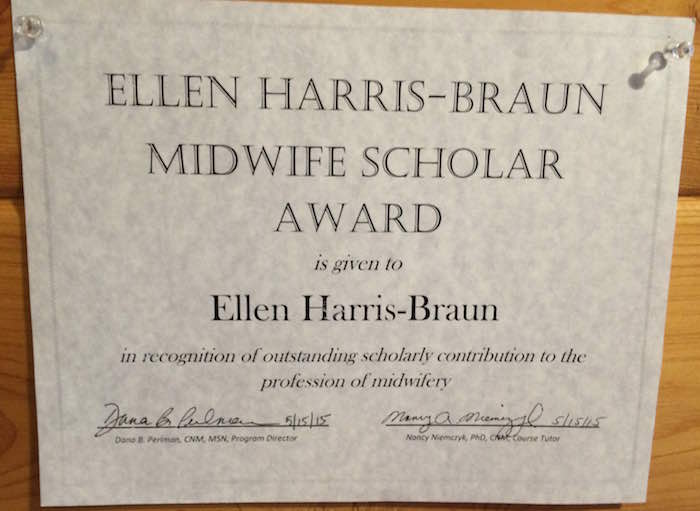 new research award
Over in the world of MANA, there is a new poster-presentation contest each year at the conference to encourage entry-level research and project descriptions. I have gotten involved in that, as well, and lo and behold, they went and named the contest after me. A very good way to get me to put energy into it :-)
One really lucky thing I see having happened in my life is all the work I did to get ready for the CM program and then the courses I took in the program itself. Things like pharmacology, which I did *not* enjoy and did not really see the point of at some times, have really helped me and served me well as I turn my concentration and what expertise I can muster to metastatic breast cancer. Having a disease like this means, to me at least, becoming an expert in your own case and care. I do it not because I don’t trust my care providers, but because it helps me feel a little bit like I’m helping drive the bus. Even though this particular bus doesn’t maybe take much direction in the end. So although I had to give up on grad school, it has helped me immensely in the last two years, for which I will always be grateful.
I feel like I am a lemon drop being sucked on and getting smaller and smaller.
I spend lots more time dozing or just eyes-closed resting than I did a few months ago. (But maybe that’s the effect of trying out morphine every 4 hours for pain?) I have less and less energy for physical projects–i get worn out and have to rest or stop.
I am spending more time in bed during the day and less downstairs, where I have to admit it’s much harder to get comfortable. Only when my picky body is comfortable and I’ve been resting for half an hour or more can I stop trying to ease what hurts and feel like “a normal person.” Whatever that means.
I have less mental energy or stamina. I can feel my mind getting tired. It is hard to engage in conversations on complicated topics. For a month or two I have been confused about day of the week, day of the month, and even what month it is and which one comes next.
What I’m trying to explore here is what makes for that lemon-drop feeling of there being less and less of Me, the Unique Ellen, in contact with the world. I wonder if I will just melt away gradually.

Just for fun, print and try this quiz!
I can’t walk well right now because of my numb and untrustworthy left foot and ankle; because I get big dizzy spells when I try to walk after sitting for 45 minutes or more; and because I get out of breath from just the effort of walking.
A few days ago I scolded myself silently, again, for being so darn stubborn, and used a motorized cart at the grocery for the first time. I don’t want to be seen as someone who needs one of these at the store. But now I am. It was helpful and I got to do the shopping with my friend Lisa instead of either wearing myself out trying to walk the whole store or waiting in the car. And on my maiden voyage, aka learn to drive this weird vehicle, I only ran in to one thing.
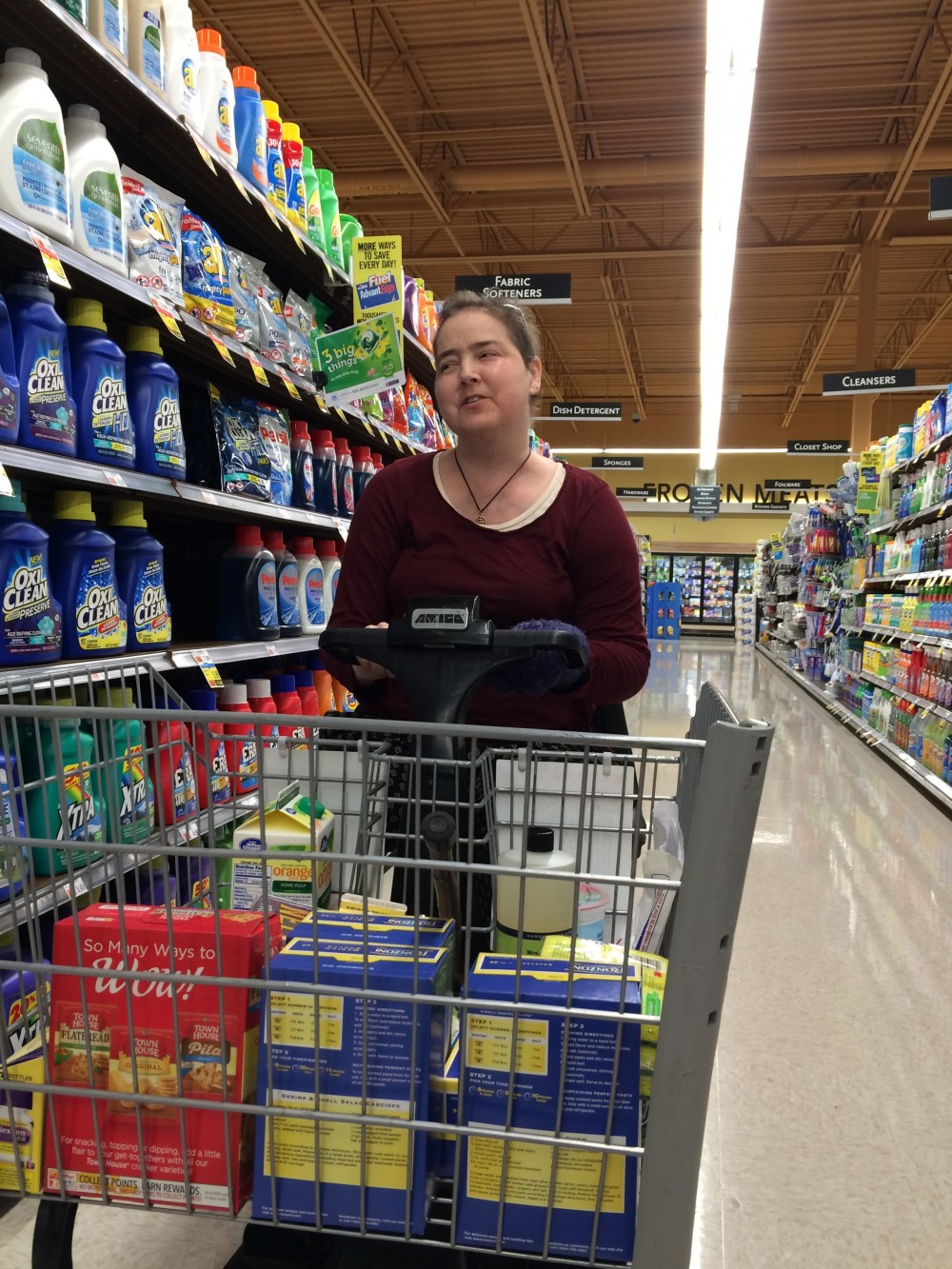 Giving in to the cart
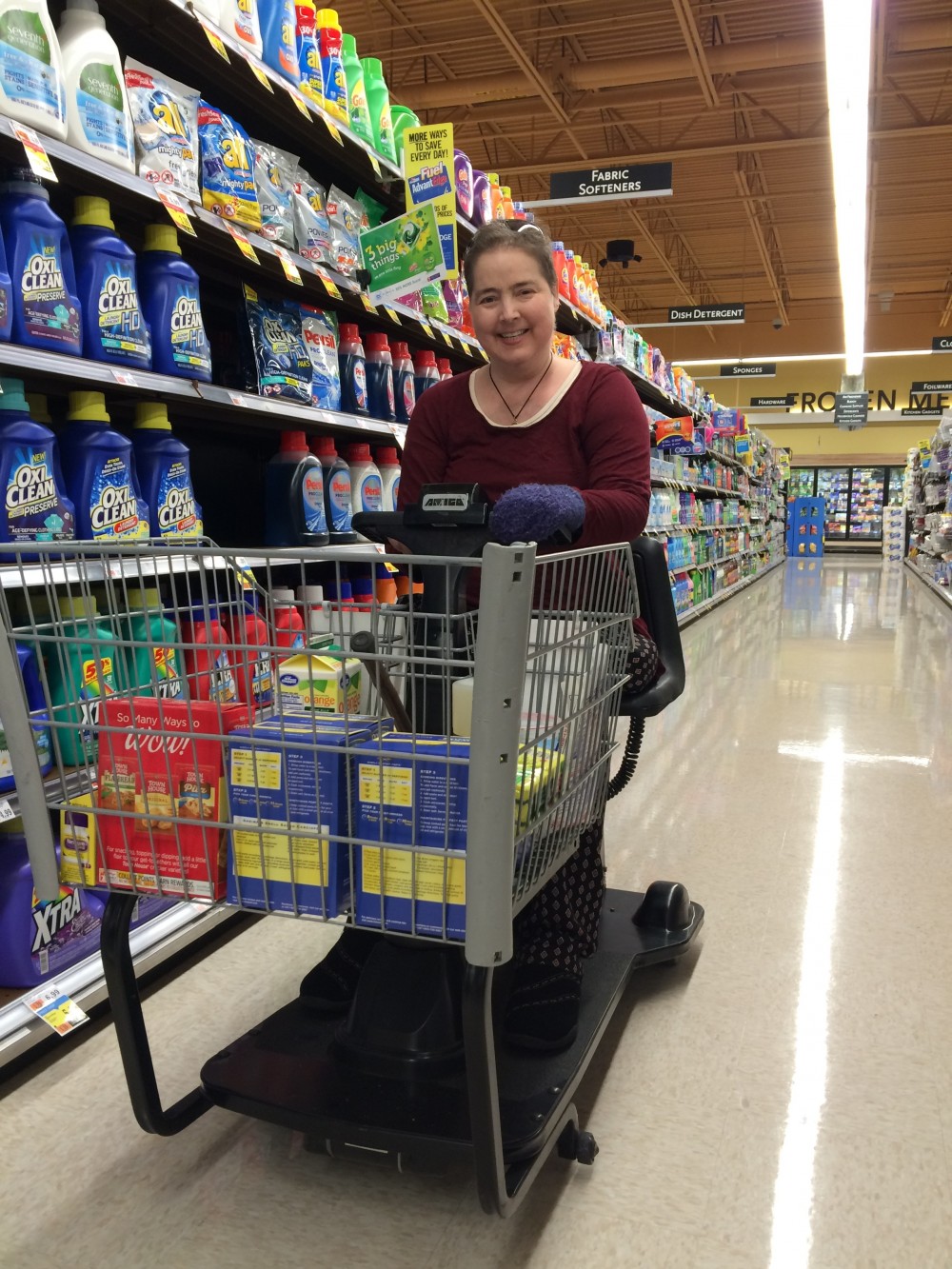
And, and, and I actually ordered a walker today. I was convinced to try it once I saw a model with a built-in seat–handy for dizzy spells–and made of purple anodized aluminum.
Mobility being my biggest challenge right now, I guess I will throw tech at it.
Wow, my teenage neighbor and fellow QIVC member Bella shaved her head a couple of weeks ago to raise money for cancer research and remember and honor some people in her life who have had cancer. I just had to go watch the mass shearing in the high-school gym, where Bella and dozens of other teens bravely said goodbye to their hair when it wasn’t even spring yet!
Thank you, Bella!
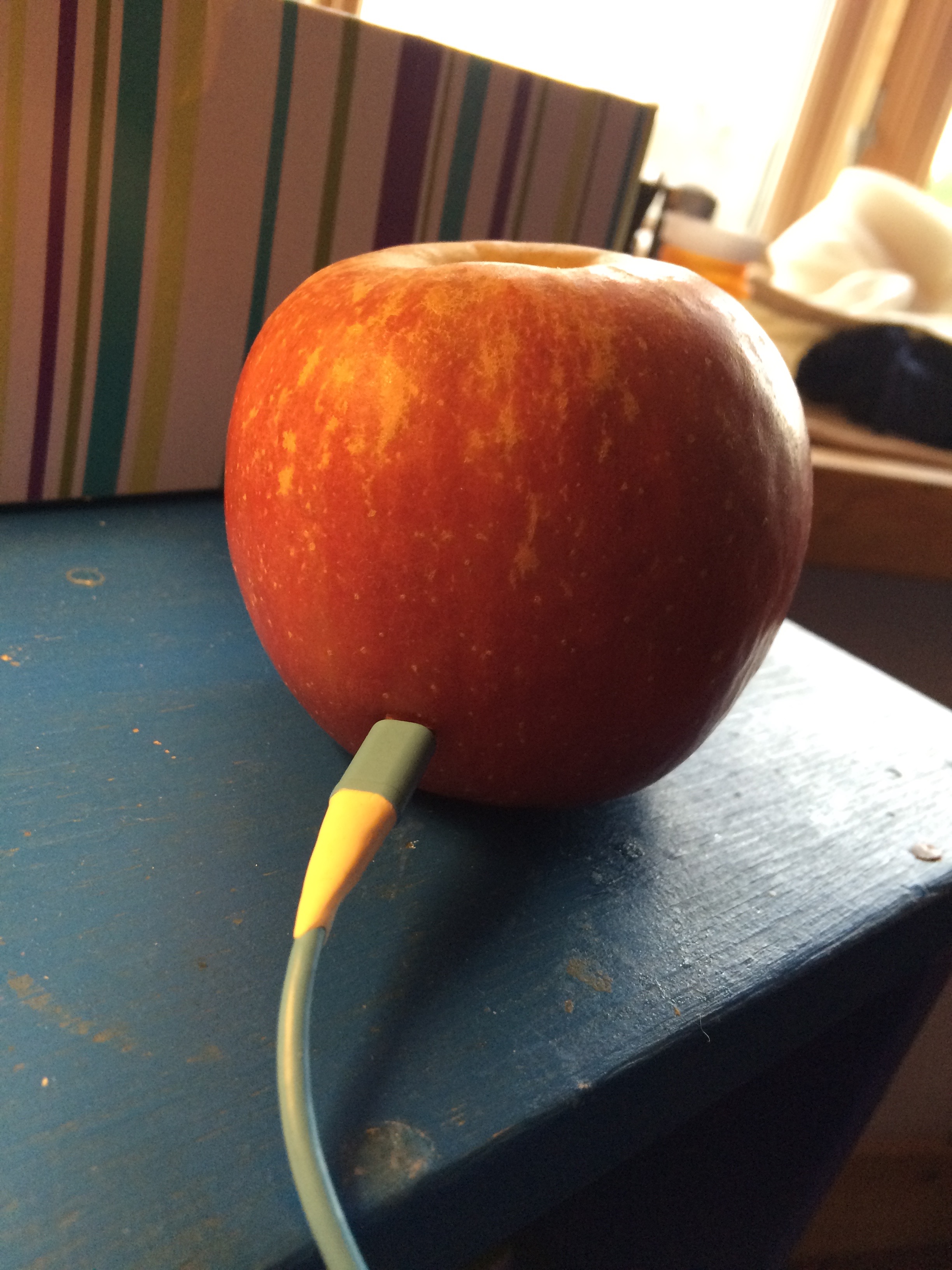 Charging my apple
Today’s chemo was the start of some cycle or other–9th intrathecal methotrexate maybe, and 6th carboplatin & gemcitabine? I am not keeping track right now. In fact for the last week or so I have not only been deeply physically tired but also very ungrounded on day of the week, day of the month, the month itself. My routine at NY Oncology Hematology keeps changing and I am just having trouble keeping up with things. Like, is it April or is it March still? Or possibly it’s already June? Yikes. Hope the fog passes over soon. And noticing how dependent I have become on the iCal app on my phone.
Cerebrospinal fluid is still coming back clear–no more cancer cells circulating–so that’s continued good news.
Today we were at NYOH from 1:30 to 5:00. Whew! Blood draw for lab work, visit with the Nurse Practitioner who works for my oncologist, IT chemo, then regular (through the port) chemo, then finally all done and out the door at 5:00.
I got right in bed because I could feel I needed REST. Getting better at realizing that, maybe, instead of trying to power through it.
 orange being peeled for me
When I found I couldn’t peel an orange or a grapefruit anymore (I like my grapefruits eaten in sections like oranges) I started working on how to cut them into sections so they could be tackled with only one working hand. That was not so easy–it was pretty messy and wasted a lot of juice on the counter–and took a cleaver and an acceptance of some pretty weird-shaped slices. After a month or two of this I saw someone at our QIVC retreat peeling an orange so I asked if she could also peel me one. Which she did. And I ate it in sections instead of tearing pulpy pieces off slices of peel–and (heres why the blog post) it was so much more delicious and enjoyable! I had forgotten. I had settled for the self-sufficient DIY method that brought me noticeably less pleasure.
I assume no one out there in healthy-person-land, world of the well, wants to peel my orange for me. But I think this is wrong in general. People wish they could help, change things, make a difference–and this is one thing they can do for me, I guess.
Surprisingly I don't think that often about the high chance that I'm going to probably die pretty soon from this cancer. I try to think about it, but it's really hard to conceive of, even when given a life expectancy that is measured in months. How to believe in that? *Why* believe in that? I don't really know how it will go and it is hard to believe, I guess, even for me. But then I step back a little bit and catch myself stumping around the kitchen, say, after breakfast—trying to do my part to clear the table—and I walk like a penguin and I almost fall down and I am breathing hard don't have any energy. This is *not* a healthy person.
So I walk to the fridge and put something away, walk back to the table, and walk back to the fridge and I'm panting. I don't have any energy and have to rest, but then I don't always rest because I'm stubborn so I end up wearing myself out like this many times a day. This morning after breakfast I decided to come up to bed again and sit and read so I had to get all the things I needed to do that and then come upstairs, which is hard these days. Then I remembered I would want the phone if it rang, and then I needed water, and then I needed to take a morphine, and once I did all that I was just staggering around like a drunken penguin because I just had no energy and could barely get myself to move around. So then I plopped into bed and waited a little bit before I could swing my legs in because I was so tired.
So I keep wearing myself out and I don't notice all the time how far I am from being a healthy person. Then some kind of reality check sinks in, like being offered a cut in the bathroom line at the movie because I have a stick to help me balance and I am obviously not healthy. Oh. This is me they're offering special treatment to?
On paper right now things look okay. The chemo we started in December and early February are both working, it seems like from the CAT scans and MRIs, and so on paper my cancer is ‘responding to second-line therapy” blah blah blah but then in my real life right now it seems really hard. Maybe more for emotional and psychological reasons than physical, but the physical – particularly fatigue and trouble walking – is pretty tough right now.
Living my life has become what I’m trying to think of as The Ellen Project, which I used to be able to manage on my own but now often need help with. Here is a whiny gallery of my daily challenges and–usually–frustrations related to my neuropathy-damaged hands.. There are many things I can no longer do for myself…big and small…or tasks that take 3-10 times longer than before, and maybe hurt along the way.
Mouse over the pictures for a quick description. Click on the pictures to read more about them. I will be adding to this gallery of woes as they stymie me.
****Last week's 3 CT scans showed some response to the new (since-December) chemo combo in my chest/abdomen/pelvis: very good news, though not all the new mets are gone. Some are just unchanged or smaller.
My various brain/spine MRIs showed leptomeningeal effects still in the central nervous system but nothing worse than late January when we started the intrathecal Methotrexate twice a week. My MRIs showed a variety of effects in the brain, always so hard to puzzle out because so much has occurred in there over the last 2-3 years, but nothing too alarming.
Chemo vs. scans to see what’s been accomplished inside of me :)
I also have 3 cranio-sacral therapy appointments set up for March to work on my spinal cord and brain from a different angle. Back when I made the appointments in early February, before starting I didn’t really know whether I would still be around for them.
The last few days have been frustrating because just as I felt like I was getting substantially better in the strength and muscle department, I lost some of it somehow. My thighs were no longer able to get me to a standing position without pushing with my arms, and my knees kept wobbling out on me unexpectedly. I was back to 2 feet on each stair instead of 1 foot per stair. And on Saturday my vision got weird – my left eye is a little out of sync.
Meanwhile, my voice seems to have gotten weaker and more ragged. Last night when we went to a Buxton event, no one could hear me talking unless I really pushed my voice hard. And just sitting and talking seems to wear me out more now than it did before–or maybe I’m just noticing it more and taking care of myself better.
I am less sturdy on my feet again and needing help with dizzy spells and sometimes getting up and down. Which sucks, because I really was climbing out of that place for the last few weeks.
On the bright side, though, both Will and Jesse are home for spring break now so our house is full. And my friend Leigh is coming today to visit for a few days! I hope I don’t have to spend too much of that time resting.
(Part four of four musings on vanity’s role in my life.) Finally we come to my final vanity: Vanity about smarts.
I have always considered myself a smart person. Besides this, I have had to navigate in the medical world, specifically the world of breast cancer, on and off since 1995. Before my diagnosis of metastatic cancer in November 2013, I had been in graduate school for midwifery for a while – wondering if some courses, like pharmacology, were ever going to really come in handy in my life as a homebirth midwife. The midwifery program involved a lot of researching studies, learning how to critique them, and understanding the value and limits of statistics. So when I had to switch my focus from midwifery to cancer, it turned out that all of this grad school stuff was hugely useful.
It is important to me to keep track of new studies that might be relevant to my case, which makes a lot of sense because we might find something useful that way. But for me it’s also about showing my doctors that I am comfortable in their world and using their language and jargon. When I meet a new doctor, it doesn’t take long for me to use a big medical word or otherwise indicate that I have some medical background; I can see people changing how they talk to me after that. I seek out doctors who like to teach; that means they are open to questions and being questioned, and will be patient with my need to go deeper into explanations and probably a lot of patients want.
Two things made me notice this vanity of mine about smarts: last summer, faced with a variety of weird symptoms that started all at once, I figured out that it was related to the vagus nerve. My oncologist and others gave me other explanations, but they didn’t make as much sense to me based on what I knew about the vagus nerve and what had happened in my body. Eventually I went to an ear, nose, and throat specialist who put a camera down my nose and looked at my vocal cords. Based on what he saw and what I told him about my symptoms, he confirmed that the vagus nerve had caused the problems. I was probably the only patient he saw that month who high-fived her husband upon being told she had vagus-nerve damage. But I was so pleased with myself! I had figured it out with my knowledge of anatomy and physiology and my careful observation of my own symptoms.
Then later in the year I got pneumonia. One day I felt really rotten and short of breath without knowing what was wrong; the next day, when I went to chemo, I insisted that they checked my oxygenation level even though they don’t usually do that along with blood pressure and temperature. The number that the pulse-ox machine showed got me a quick ticket to the emergency department instead of chemo that day, and I was admitted for treatment for a few days. What makes me a bit proud about this is that I figured out something was wrong pretty early in the disease process, so I wasn’t too miserable and it was pretty easy to get rid of.
Another thing we did with smarts (Eric helped) was to create a spreadsheet to track my brain mets. The written reports were hard to compare and I noticed the radiologists who were writing them were sometimes failing to write follow-up notes on mets that had been seen in a previous scan and listed in a previous report. Tracking the mets this way just seems more organized–thus less likely to lead to mistakes–so why not do it? Since the doctors won’t, I do.
So I feel pretty vain about being smart in this realm that I am forced to inhabit. Sometimes when I don’t feel energetic enough in the brain to engage at this level, I wonder how I will adapt if I ever lose the sharp, medical-smarts part of me for good. I know there are cancer patients who do none of my self-education and don’t ask a lot of questions, and that must be fine for them. But for me the educated back-and-forth and discovery of interesting new studies is part of this whole experience–a part that buoys me up.
I’ve been getting intrathecal methotrexate (methotrexate injected into my cerebro-spinal fluid) for about a month now, which makes for a busy chemo schedule twice a week in Albany along with my other chemo regimen. But it seems to be working!
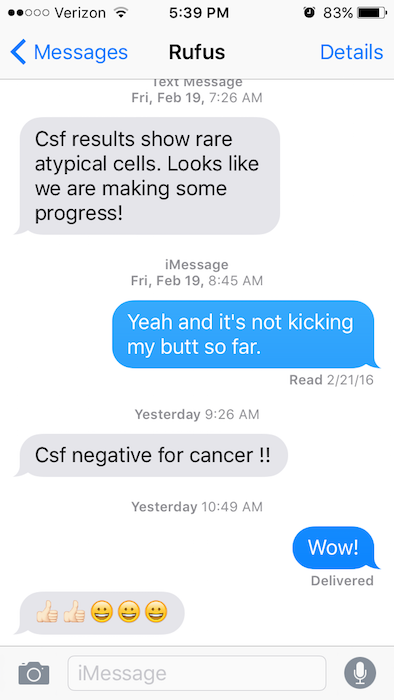 Texting with my oncologist
I don’t know what this means for my chemo schedule in the next month or so, but I I know it’s good news. Only half of patients respond to methotrexate at all, so I’m in that half, which is great. Now median survival is seven months, with 15% of patients stretching that out beyond 12 months.
Recently a few of my closest family members and friends got together and wrote up a report card for my recent course load at the University of Oncological Resistance (UOR). It is pretty funny so I thought I would share it.:
Ellen's report cardToday is “quick” chemo (just methotrexate) and my stepsister Deb, who is visiting, is taking me. Then we will stop by the Honest Weight food co-op in Albany to get ingredients for all the yummy things Deb is going to cook for us. Wooo!
I am still really fatigued most of every day–I assume it’s the demanding new chemo schedule. Hard to adjust to, and I hope it’s just a phase.